Mastering Hangar Operations: A Technical Guide to Private Hangar Logistics
In the hierarchy of aviation assets, the hangar is frequently misunderstood as a static storage volume. This reductionist view is the primary failure point for many aviation departments. When viewed through the lens of industrial logistics, the hangar facility functions as a critical node in a supply chain, requiring the same level of rigorous management, process engineering, and risk mitigation as a manufacturing floor or a complex warehousing operation.
The transition from viewing a facility as “real estate” to viewing it as “operational infrastructure” requires a paradigm shift. Every square foot of floor space carries an opportunity cost, and every movement of an aircraft represents a potential failure point for safety and airframe integrity. Achieving efficiency in this environment demands the integration of facility maintenance, inventory control, human factors, and regulatory compliance into a unified system. For managers tasked with this oversight, the challenge lies in balancing the need for rapid aircraft turnaround with the absolute requirement for meticulous environmental and procedural control.
This article provides an analytical framework for the comprehensive management of hangar facilities. It bypasses the surface-level operational advice found in trade brochures, focusing instead on the systemic interdependencies that define high-performance aviation environments. By dissecting the logistical, financial, and structural dimensions of hangar management, we can develop a robust methodology for ensuring that these facilities serve as force multipliers for aviation operations rather than bottlenecks or liabilities.
Understanding “how to manage private hangar logistics”
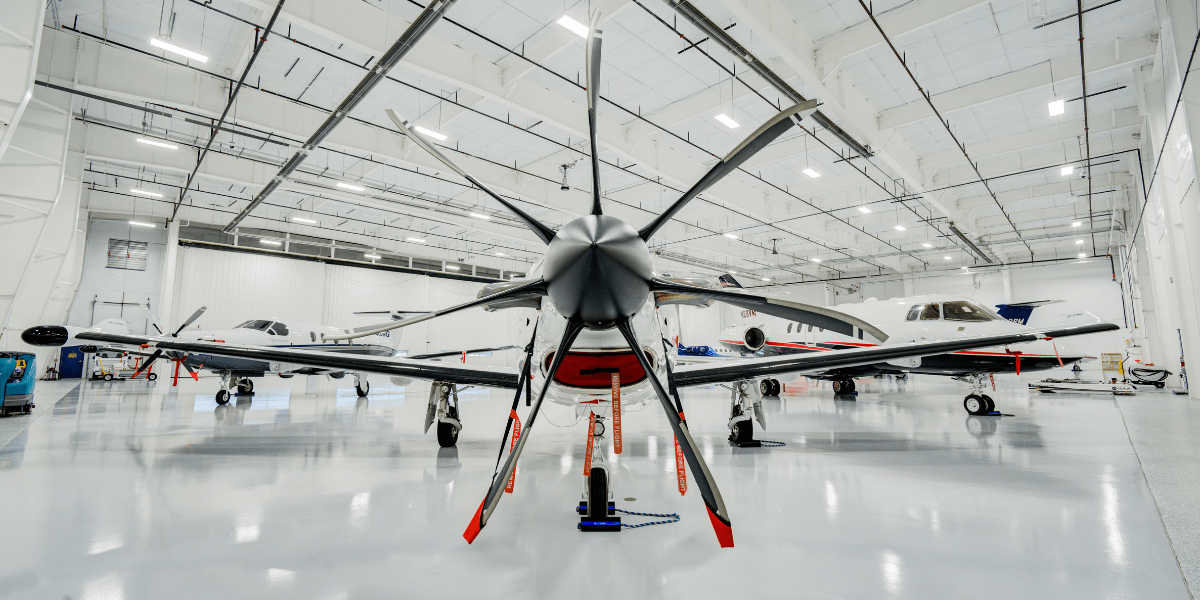
The concept of how to manage private hangar logistics encompasses a surprisingly broad spectrum of industrial activity. It involves the orchestration of environmental systems (heating, humidity control, lighting), the strict policing of foreign object debris (FOD), the management of hazardous materials (fuel, hydraulic fluids, cleaning agents), and the logistical optimization of ground support equipment (GSE). In reality, the hangar is a high-turnover environment that requires active, constant management to ensure the integrity of the aircraft and the safety of the personnel.
Oversimplification in this domain leads to “ramp rash,” systemic degradation of airframes, and significant regulatory fines. If a manager does not understand the interplay between facility air quality and long-term corrosion prevention, or the relationship between floor-space organization and dispatch reliability, they are managing from a position of profound disadvantage. The objective of learning how to manage private hangar logistics is to build a redundant, fail-safe system that ensures an aircraft is ready for flight the moment it is required, with no latent defects introduced by the facility itself. This requires a transition from reactive facility “upkeep” to proactive operational engineering.
Deep Contextual Background
Historically, the hangar was a utilitarian shed. The requirements were minimal: a roof to keep the rain off, a door to keep the aircraft secure, and a basic concrete slab. However, as business aviation grew more complex, the demands on the ground environment accelerated. The introduction of composite-material aircraft necessitated stricter temperature and humidity controls to prevent structural degradation. The increasing density of corporate flight departments meant that hangar floor space became a premium commodity, demanding sophisticated space-optimization strategies.
We have entered an era where the aviation industry is under intense scrutiny regarding environmental sustainability, safety protocols, and operational transparency. Modern hangars must now account for complex fire suppression regulations, water runoff management (to protect against ground contamination), and advanced security integration. The evolution of the hangar from a “parking spot” to a “data-connected operational hub” reflects the broader digitization of the aviation industry. Modern managers must be as comfortable analyzing facility sensor data as they are managing the physical movement of aircraft.
Conceptual Frameworks and Mental Models
To achieve mastery in this field, one must apply analytical frameworks that isolate variables within the hangar environment.
-
The Hierarchy of Operational Continuity: This model prioritizes hangar activities. At the base is Facility Integrity (fire/security); the middle is Environmental/Structural Control (corrosion prevention); and the apex is Operational Readiness (dispatch capability).
-
The “Zone of Contamination” Mental Model: Treat the hangar floor as a surgical environment. Any item not required for the immediate maintenance or movement of the aircraft is a hazard. This forces a mindset of aggressive FOD control.
-
The Space-Time Efficiency Model: Every movement of an aircraft should result in a net gain for the operation.
Key Categories and Operational Variations
The logistical approach varies significantly depending on the hangar configuration and the scale of the operation.
| Hangar Type | Logistical Complexity | Primary Operational Constraint |
| Private Corporate Hangar | High (Integrated) | Asset availability/Dispatch priority |
| FBO/Community Hangar | Extreme (Shared) | Space optimization/Conflict resolution |
| T-Hangar/Small Private | Low | Structural security/Limited resources |
| Maintenance Hangar | Extreme (Specialized) | Regulatory compliance/Tool control |
The decision logic here is driven by the mission profile. A dedicated corporate facility requires how to manage private hangar logistics with a focus on “high-availability” dispatch, whereas an FBO facility focuses on “high-throughput” turnover.
Detailed Real-World Scenarios
-
Scenario A: The Fire Suppression Failure. A hangar’s fire suppression system triggers erroneously due to a sensor malfunction. The logistics manager must have a pre-planned, phased recovery strategy. Without this, the chemicals used in suppression can cause irreversible damage to the avionics and airframes.
-
Scenario B: The FOD Crisis. An object—such as a discarded fastener—is left on the floor and ingested by a turbine. This represents a total failure of the logistics flow. The recovery plan here isn’t just about the engine; it’s about a root-cause analysis of the “cleanup” procedure.
-
Scenario C: Environmental Contamination. A hydraulic leak is detected. The logistics system must ensure the spill is contained, reported, and remediated in accordance with local regulations, preventing the facility from being shut down by environmental agencies.
-
Scenario D: The Space Crunch. A sudden influx of aircraft creates a gridlock. The effective manager uses a grid-based movement strategy, pre-calculating the “dance” of aircraft to ensure the priority asset is always at the hangar door.
Planning, Cost, and Resource Dynamics
The management of hangar space is a balancing act between fixed costs and operational liquidity.
-
Direct Costs: Energy consumption (HVAC), cleaning/janitorial services, fire suppression system maintenance, and GSE maintenance.
-
Indirect Costs: The “Hidden” cost of idle assets, the cost of regulatory non-compliance, and the opportunity cost of inefficient floor usage.
-
Variable Resource Constraints: Labor is the most volatile resource. The manager must calculate the “optimal crew size” for aircraft movement. Too few, and you risk damage; too many, and you incur excessive labor costs.
Tools, Strategies, and Support Systems
-
CMMS (Computerized Maintenance Management System): Essential for tracking facility assets, fire extinguisher inspections, door maintenance, and electrical system health.
-
FOD Prevention Grids: High-visibility floor markings that divide the hangar into zones, simplifying the cleaning and inspection process.
-
Real-Time Environmental Monitoring: Sensors that alert management to humidity or temperature spikes, which can affect airframe integrity.
-
Tug/Towbar Analytics: Systems that track the maintenance hours of ground support equipment to prevent failures during critical dispatch windows.
-
Access Control Logs: Digital logging of every person entering the facility, which is a critical component of security and liability management.
Risk Landscape and Failure Modes
Risk in hangar management is rarely catastrophic until it is too late. It is usually the accumulation of “small” errors.
-
Structural Complacency: The assumption that because the building is made of steel, it requires no maintenance. Failure to inspect roof integrity or door track health can lead to massive failure during weather events.
-
The “Normalization of Deviance”: When crews start bypassing safety steps (e.g., leaving a tug in a walkway, skipping the FOD walk), it creates a culture where major accidents become statistically inevitable.
-
Regulatory Drift: Environmental codes change. If the logistics plan is five years old, it is almost certainly non-compliant with modern spill containment or energy efficiency standards.
Governance, Maintenance, and Long-Term Adaptation
A successful hangar management strategy requires a cycle of continuous improvement.
-
The Layered Checklist for Operations:
-
Daily: FOD walk, GSE check, egress check.
-
Monthly: Fire suppression test, floor integrity check.
-
Quarterly: Electrical load check, HVAC filter service.
-
Annually: Structural integrity audit, environmental compliance review.
-
-
Adaptation Triggers: When operational volume increases by 20%, the entire floor-flow logic must be re-evaluated. Do not wait for the gridlock to occur.
-
Review Cycles: Treat the hangar management plan like a flight manual.
Measurement, Tracking, and Evaluation
You cannot manage what you do not measure.
-
Leading Indicators: “Number of near-misses” (trips, minor tug bumps), “GSE preventative maintenance adherence,” “Time to clear hangar floor.”
-
Lagging Indicators: “Reportable safety incidents,” “Total energy cost per aircraft movement,” “Downtime caused by facility failure.”
-
Documentation Example: Maintain a “Facility Operational Log.” This should be distinct from the aircraft maintenance logs. It tracks the facility itself: every door opening, every spill, every bulb replacement. This is your primary defense in insurance audits or regulatory investigations.
Common Misconceptions and Oversimplifications
-
“Hangar management is just janitorial work.” It is industrial facility management. The difference is the cost of the asset being managed.
-
“Fire suppression is a one-time install.” It requires rigorous, constant inspection.
-
“Any tug will do.” Using the wrong GSE for a specific aircraft class leads to structural damage that might not be detected for years.
-
“Space is infinite.” The geometric limitations of hangar floor space are absolute.
-
“Regulation is optional.” Environmental and building codes are increasingly strict, and violations can shut down an operation overnight.
-
“Security is just a lock on the door.” Security includes the digital control of who has the code and the physical monitoring of the perimeter.
Ethical and Contextual Considerations
The environmental footprint of a hangar is significant. The energy cost of cooling or heating 50,000 square feet of space is immense. An ethical manager takes steps to optimize this—using LED lighting, high-efficiency HVLS (High Volume, Low Speed) fans, and advanced insulation. Furthermore, the management of hazardous waste (oil, solvents) is a moral and legal imperative. Proactive environmental stewardship protects the firm from long-term liability and demonstrates corporate responsibility.
Conclusion
Understanding how to manage private hangar logistics is about much more than maintaining a building; it is about creating an environment that supports the mission of the aircraft. By applying industrial-grade discipline to the facility, managers can eliminate the “friction” that causes operational delays, safety incidents, and unnecessary costs. The hangar should be a silent partner in the operation—a space that, through rigorous design and management, remains entirely unobtrusive while providing absolute security and readiness for the assets within. There is no shortcut to this level of capability. It requires a commitment to continuous observation, data-driven adjustment, and the refusal to accept the status quo.