Addressing Common Pilot Fatigue Mistakes: A Safety-Critical Analysis
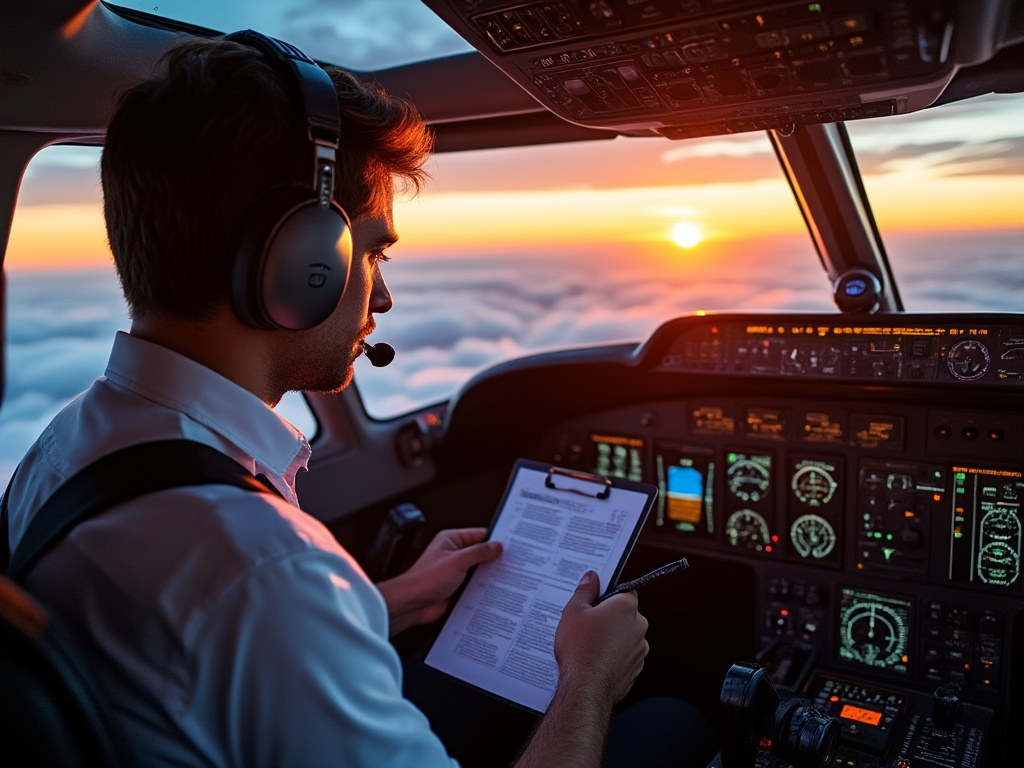
Aviation safety is often characterized by the rigorous application of engineering standards, weather minima, and mechanical adherence. Yet, the most complex component of the flight deck—the human operator—remains subject to biological constraints that defy engineering solutions. Pilot fatigue is not merely a state of “feeling tired”; it is a physiological impairment that degrades cognitive function, situational awareness, and executive decision-making with the same clinical certainty as alcohol consumption. The assumption that experienced aviators can “will” themselves through sleep deprivation is a foundational error that undermines the structural integrity of flight safety.
The operational environment of modern aviation—characterized by high-tempo scheduling, transmeridian travel, and the unrelenting demands of cockpit automation—often masks the onset of fatigue until cognitive tunneling or vigilance lapses have already occurred. When operations prioritize schedule reliability over physiological recovery, the margin for error narrows precipitously. Mitigation requires a transition from viewing fatigue as an individual moral failing to treating it as a predictable, manageable, and systemic hazard that requires proactive risk mitigation frameworks rather than reactive discipline.
This analysis dissects the biological reality of fatigue, the systemic oversights that perpetuate it, and the rigorous countermeasures required to sustain performance in high-stakes environments. The objective is to shift the dialogue from anecdotal endurance to data-driven resilience.
Understanding “common pilot fatigue mistakes”
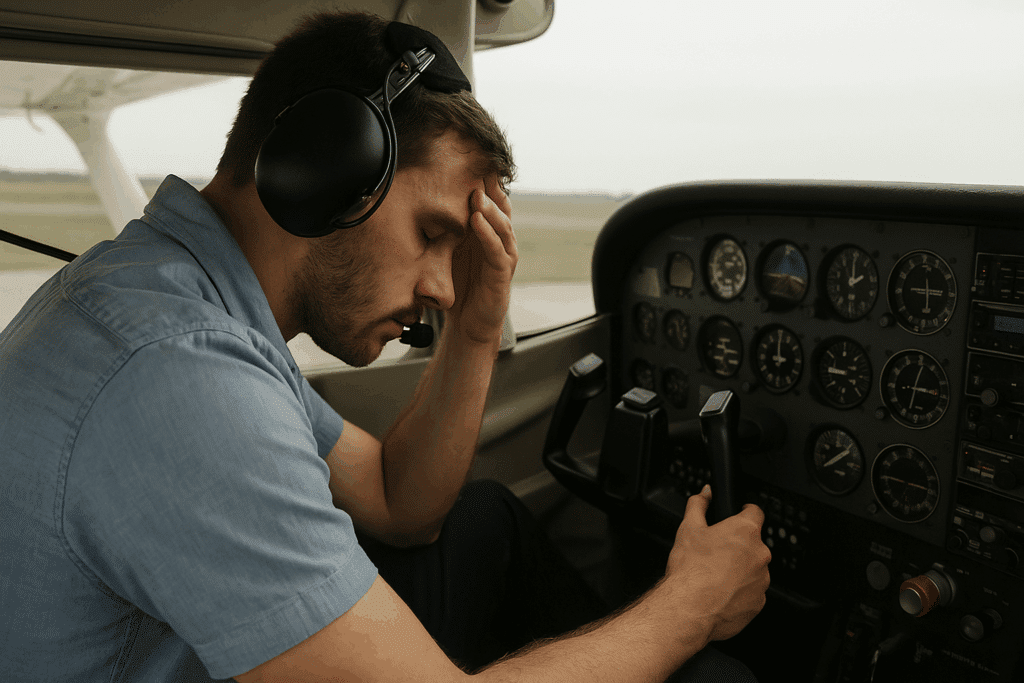
The taxonomy of common pilot fatigue mistakes extends far beyond the individual’s inability to sleep. It is an intersection of flawed scheduling logic, misunderstanding of circadian rhythms, and the normalization of sub-optimal rest protocols. A frequent oversimplification is the reliance on subjective “feeling” to determine readiness. Human beings are notoriously poor at self-assessing their own level of impairment; the sleep-deprived brain is effectively blind to its own cognitive deficits.
The danger of this is amplified by the “mission-centric” bias prevalent in aviation culture. Pilots often prioritize the successful completion of the flight above their own physiological needs, a mindset that transforms manageable tiredness into a hazardous operational state. By failing to recognize the distinction between “acute sleep loss” (lack of sleep in the previous 24 hours) and “chronic fatigue” (cumulative sleep debt over weeks), operators frequently implement inadequate countermeasures. Understanding these mistakes requires deconstructing the assumption that coffee, cockpit temperature, or mental stimulation can compensate for the homeostatic drive to sleep. These are merely masking agents, not solutions.
Deep Contextual Background
Historically, aviation regulation treated fatigue as a variable to be managed via rigid duty-time limitations. These “hours-of-service” rules were based on the assumption that if a pilot remained within the legal limits, they were fit to fly. This approach failed to account for the variability of human biology—the difference between a 2:00 AM takeoff and a 2:00 PM takeoff, or the impact of time-zone crossing on the body’s internal clock.
The transition toward Fatigue Risk Management Systems (FRMS) marks a pivotal evolution in aviation safety. Regulatory bodies have begun to mandate that operators demonstrate a scientific understanding of fatigue, rather than just compliance with hourly caps. Despite this, the systemic pressure to maximize aircraft utilization continues to clash with the biological reality of the human crew. The aviation industry is in a state of perpetual tension between the economic necessity of high-tempo operations and the inescapable physiological limits of the crew member.
Conceptual Frameworks and Mental Models
To effectively analyze and mitigate fatigue, one must move beyond linear thinking.
-
The Two-Process Model of Sleep Regulation: This framework posits that sleep is regulated by two interacting processes: the homeostatic sleep drive (which builds up the longer one is awake) and the circadian alerting signal (the internal body clock). Pilots often make the mistake of fighting their circadian trough, which is when cognitive performance is at its nadir, regardless of how much coffee is consumed.
-
The Performance-Resource Function: Cognitive resources are finite. Every task—radio communications, navigation, checklist management—depletes this resource. When a pilot is fatigued, the “cost” of every task increases, leading to a rapid exhaustion of the total resource pool.
-
The SHELL Model (Software, Hardware, Environment, Liveware): Fatigue is a “Liveware-Liveware” and “Liveware-Environment” interface issue. A pilot’s internal state (Liveware) interacts with the cockpit (Hardware) and the organizational culture (Software), creating potential failure points that are often mislabeled as simple “human error.“
Key Categories and Operational Variations
Fatigue risks generally fall into operational and individual categories, each with distinct mitigation strategies.
| Fatigue Category | Operational Manifestation | Mitigation Strategy |
| Circadian Desynchrony | Jet lag, red-eye scheduling | Strategic light exposure, pre-trip shifting |
| Acute Sleep Restriction | Night before the flight | Strict pre-flight sleep hygiene, napping |
| Chronic Sleep Debt | High-tempo, recurring turns | Mandatory minimum rest, schedule rotation |
| Task-Induced Fatigue | Monotonous cruise flight | Strategic interaction, active scanning |
The decision logic here is clear: operational fatigue requires systemic scheduling changes, whereas individual fatigue requires tactical management (napping, caffeine, nutrition). The primary failure is attempting to fix systemic fatigue with individual-level tactics.
Detailed Real-World Scenarios
-
Scenario A: The “Night-Before” Anxiety. A pilot anticipates an early departure and tries to force sleep hours before their natural circadian cycle allows. This leads to extended wakefulness in bed, increased frustration, and diminished sleep quality. The result is “sleep fragmentation,” which is often worse than partial sleep deprivation.
-
Scenario B: The Commuter’s Gamble. A pilot lives in a different time zone than their base and commutes on their day off. They arrive at the airport already suffering from travel fatigue. By the time they reach the cockpit, their “duty time” clock has started, but their “physiological performance” clock is already significantly degraded.
-
Scenario C: The “Get-Home-Itis” Push. Approaching the end of a long, fatigued duty day, the crew encounters weather. Fatigue leads to a rigid adherence to the original plan (plan continuation bias), rather than diverting to an alternate. The fatigue mistake here is not the flying itself, but the degradation of the “divert” threshold.
-
Scenario D: Controlled Rest on the Flight Deck (CRFD). A crew attempts a tactical nap but lacks the discipline to manage the “sleep inertia” phase upon waking. They return to active flying while still cognitively impaired, essentially operating with degraded situational awareness during the descent—the most critical phase of flight.
Planning, Cost, and Resource Dynamics
The economic impact of fatigue is massive, often hidden within the costs of incident investigations, crew turnover, and insurance premiums.
-
Direct Costs: Training and certification of replacement crews, administrative investigation costs, medical expenses.
-
Indirect Costs: Loss of aircraft/hull damage, legal liability, reputational damage to the flight department, and the degradation of the organizational safety culture.
-
Opportunity Costs: A pilot operating at 80% cognitive capacity makes slower decisions, which cumulatively adds minutes to taxiing, fuel burn, and scheduling margins across a fleet.
Tools, Strategies, and Support Systems
-
Bio-Mathematical Modeling: Using software to predict fatigue levels based on the work schedule and sleep history.
-
Controlled Rest Protocols: Implementing specific, scientifically validated procedures for on-deck napping (e.g., 20-minute caps to avoid deep sleep).
-
Light Therapy (Phototherapy): Using light boxes to shift the circadian phase before and during trips.
-
Caffeine Management: Strategic usage. The mistake is consuming caffeine too late in the duty period, which destroys the quality of the subsequent rest opportunity.
-
Logbook/Sleep Diaries: Tracking actual vs. planned sleep to identify chronic deficits that lead to long-term performance decay.
Risk Landscape and Failure Modes
The primary failure is the “normalization of deviance.” When crews successfully operate while fatigued, they incorrectly conclude that their fatigue mitigation strategies are effective.
-
Cognitive Tunneling: A failure to scan the full environment, focusing only on the primary flight display and ignoring secondary warnings or communication.
-
The “Wait-and-See” Failure: In a fatigued state, the brain prefers the path of least resistance. If a system anomaly appears, the fatigued pilot often chooses to monitor it rather than take immediate, decisive action.
-
Communication Degradation: The breakdown of the Sterile Cockpit rule. When fatigued, pilots struggle to maintain professional communication standards, leading to informal, abbreviated, and error-prone cross-checking.
Governance, Maintenance, and Long-Term Adaptation
Fatigue management must be institutionalized, not optional.
-
The Layered Checklist for FRMS:
-
Individual: Pre-duty sleep accountability, daily wellness assessment.
-
Scheduling: Adherence to circadian-friendly rotations (forward-rotating shifts).
-
Organizational: Non-punitive reporting systems for fatigue-related concerns.
-
-
Monitoring Cycles: Review the “Fatigue Reports” (if the culture allows) every quarter to identify systemic issues—perhaps a specific route or aircraft type is consistently causing fatigue-related deviations.
-
Adjustment Triggers: If a crew member declares fatigue, the protocol must be immediate, automatic, and free of administrative “investigation” that discourages future reporting.
Measurement, Tracking, and Evaluation
You cannot manage what you do not measure, but fatigue is notoriously difficult to quantify in real-time.
-
Leading Indicators: Schedule volatility, “planned vs. actual” rest periods, frequency of fatigue reports (a high number can actually indicate a healthy safety culture, not necessarily a dangerous operation).
-
Lagging Indicators: Near-miss incidents, manual altitude/heading deviations, communication errors during critical phases of flight.
-
Documentation Example: Maintain a “Fatigue and Performance Log.” This is a private, individual document where the pilot logs their sleep quality, duty timing, and subjective alertness. It serves as a personal “red-line” tracker.
Common Misconceptions and Oversimplifications
-
“I am a night person, so I don’t get tired at night.” Human physiology dictates circadian lows; individual preferences cannot override the biology of the suprachiasmatic nucleus.
-
“Coffee makes me as alert as I am after a full night’s sleep.” Caffeine only masks the symptoms of sleep pressure; it does not restore cognitive processing speed or problem-solving capability.
-
“Short-haul flying is less fatiguing than long-haul.” The “multitude of landings” (the “high-density cycle”) in short-haul flying creates a different, often more intense, fatigue profile than long-haul monotonous cruise.
-
“I can ‘catch up’ on sleep during my days off.” Recovery is non-linear; chronic sleep debt takes several days to resolve and cannot be “banked” in advance.
-
“The autopilot reduces my fatigue.” While it reduces physical workload, it increases cognitive boredom and complacency, which can be equally hazardous.
-
“Fatigue is just a problem for airline pilots.” The general aviation (GA) sector is at even higher risk due to lack of formalized FRMS and irregular, often self-imposed, scheduling pressures.
Ethical and Contextual Considerations
The ethical dimension of fatigue management is the “Just Culture.” If a pilot reports fatigue and is reprimanded, they will never report it again. Aviation management must recognize that a pilot reporting fatigue is an act of professionalism—an admission that they can no longer ensure the safety of the mission. Treating this as a failure of character rather than a management of risk is the single most dangerous error in aviation governance.
Conclusion
The mitigation of fatigue is not achieved through willpower, nor is it solved by coffee. It is a systematic, data-informed discipline. By eliminating common pilot fatigue mistakes, aviation departments can build resilience against the inherent biological vulnerability of the human operator. This involves a rigorous, honest assessment of scheduling, a commitment to circadian hygiene, and a culture that prioritizes safety over the temporal demands of the operation. The goal is to create an environment where the cockpit is always staffed by an alert, capable, and cognitively sound operator—not because they tried harder, but because the system they inhabit was designed to ensure their success. Fatigue management is not an administrative burden; it is the bedrock of operational integrity.