
Evaluating Top Jet Charter Broker Options: A Strategic Guide for Aviation Managers
The private aviation market is frequently perceived through the lens of aesthetic comfort and brand prestige. Yet, for corporate flight departments, family offices, and high-frequency travelers, the aircraft cabin is secondary to the reliability of the logistics chain that places it on the tarmac. At the center of this logistical chain sits the charter broker—an intermediary whose efficacy, or lack thereof, determines the safety, financial integrity, and operational success of a mission. Evaluating the current market requires a shift from consumer-centric decision-making toward an operational, risk-mitigation-focused methodology.
The aviation industry is fragmented by design. Air operator certificate (AOC) holders, or “operators,” are the entities that physically manage, staff, and maintain the aircraft. Brokers, conversely, are the architectural layer that connects demand with this supply. This separation of duties creates significant informational asymmetry. A broker’s value proposition is not simply “access to planes,” but rather their capacity to filter the thousands of active Part 135 operators through a rigorous lens of safety, financial stability, and logistical capability. When selecting partners, the challenge is not finding availability; it is verifying that the chosen provider has the internal controls to ensure that availability is reliable, compliant, and fiscally sound.
This article serves as an analytical framework for professionalizing the procurement of private aviation services. It avoids the promotional rhetoric that dominates much of the industry’s digital discourse and instead focuses on the structural realities of vendor management, due diligence, and performance monitoring. By treating the broker-client relationship as a strategic supply-chain partnership, stakeholders can secure a level of operational assurance that standard transactional purchasing cannot replicate.
Understanding “top jet charter broker options”
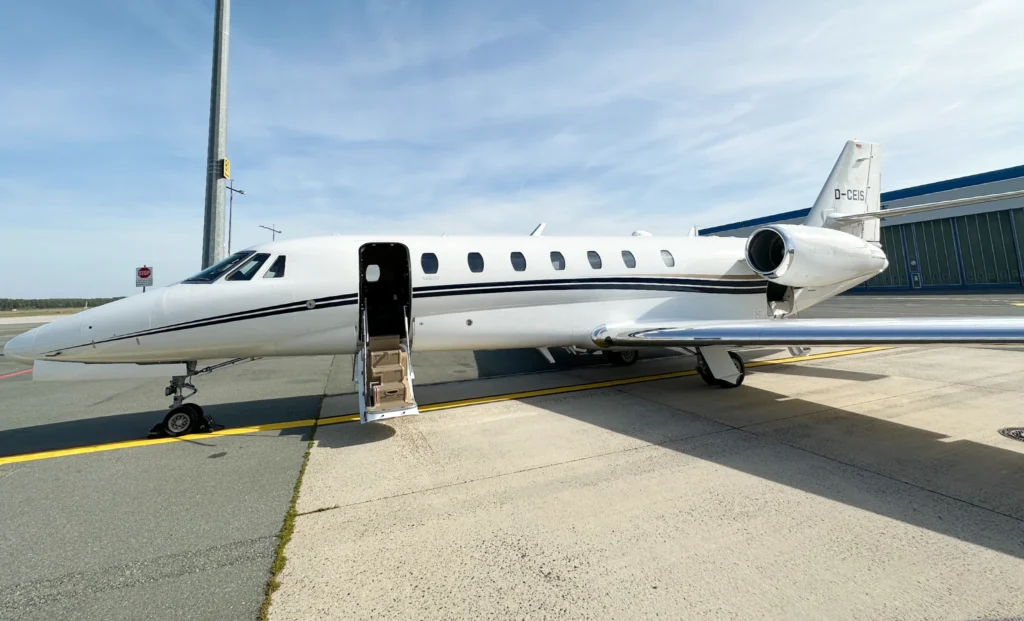
When industry professionals discuss top jet charter broker options, they are rarely referring to the most famous brand names or the highest-ranking search results. Instead, the term refers to the subset of firms that consistently demonstrate institutional-grade vetting protocols. A common misconception is that the “best” broker is the one with the lowest price. In aviation, price is often a lagging indicator of operational quality. If a quote is significantly below the market average, it is rarely due to a “deal”; it is often due to the omission of hidden variables, such as de-icing costs, international fees, or, more critically, an operator with lower safety standards.
Oversimplification in this space leads to significant risk. This is a dangerous fallacy. In the absence of a comprehensive due diligence process, the broker may simply be acting as a passive relay between a client and an unknown operator, with no oversight of maintenance status, insurance validity, or pilot duty-time compliance. If an intermediary cannot, or will not, identify the operator and provide the tail number well in advance of the trip, they fail the basic test of institutional aviation procurement.
Deep Contextual Background
The evolution of the charter brokerage model has tracked the broader consolidation of the general aviation sector. Historically, private aviation was a decentralized market of small, local operators. However, the 2020s marked a second wave of change: the rise of digital-first platforms and vertically integrated models.
This shift has created a more efficient, but more opaque, environment. While algorithms can now match a mission to a tail number in seconds, they cannot inherently judge the subtle, non-quantifiable aspects of an operator’s safety culture. Today’s sophisticated aviation buyer must navigate a landscape where technology simplifies the search, but human expertise remains the only reliable filter for operational risk.
Conceptual Frameworks and Mental Models
To evaluate top jet charter broker options effectively, apply the following frameworks:
-
The Transparency-Audit Model: Does the broker provide raw, unvarnished data regarding the operator, including their specific air carrier certificate, insurance certificate (COI), and recent incident history? If the information is curated or filtered, the model is failing.
-
The Vertical Integration vs. Agnostic Model: Vertically integrated firms (who own/operate their own fleet) offer consistency but limited choice. Broker-only firms (who do not own aircraft) offer a wider range of options but require more intensive vetting of their network. Each model has distinct failure points.
-
The “Broker-Chain” Risk: A major failure mode in the industry is the “broker-to-broker” scenario, where your primary broker is actually brokering the flight to another broker, who then contacts the operator. This creates a chain of custody where communication and safety standards dilute at each link.
Key Categories and Operational Variations
The broker landscape is categorized by the degree of control they exert over the supply chain:
| Category | Typical Profile | Primary Advantage | Primary Constraint |
| Retail/Boutique Broker | High-touch, personalized | Relationship-driven, customized | Higher price, lower volume |
| Wholesale/Volume Broker | Large-scale, negotiated | Access to lower pricing | Less personalized oversight |
| Digital-First Platform | Tech-enabled, rapid | Speed, efficiency, visibility | Less nuance for complex trips |
| Consultancy/Managed | Integrated fleet advisor | Absolute control, long-term | High entry cost, dedicated asset |
The decision logic here hinges on whether the requirement is transactional (a single A-to-B flight) or strategic (managing an annual travel program).
Detailed Real-World Scenarios
-
Scenario A: The Short-Notice AOG (Aircraft on Ground) Event. A corporate client needs an emergency replacement for a mechanical failure. The broker’s ability to pivot depends on their network of “on-call” operators. The failure mode here is a broker who lists an aircraft as “available” without verifying the operator’s current crew duty time or maintenance status, leading to a second failure after the original flight.
-
Scenario B: The International Regulatory Challenge. A flight requires a destination with specific customs or permit requirements. A generalist broker may book the flight, but a high-end option will proactively manage the permits and ground handling, identifying potential regulatory bottlenecks before they disrupt the mission.
-
Scenario C: The Peak-Season Surge. During major sporting events or holidays, availability tightens. The successful broker uses long-term relationships to “hold” capacity, whereas the transactional broker is left sourcing marginal aircraft at premium prices.
Planning, Cost, and Resource Dynamics
The economics of private aviation are notoriously non-linear.
-
The “All-In” Mirage: Brokers often present quotes that exclude “variable” costs such as de-icing, international handling, or landing fees. Professional procurement requires a comprehensive estimate of these variables before the contract is signed.
-
Opportunity Cost of Delay: In corporate settings, the cost of an aviation delay—missed deals, executive downtime—often dwarfs the price difference between a mid-tier and a top-tier charter provider.
-
Range-Based Cost Logic:
-
Transactional Brokerage: Cost is usually a percentage of the charter price; can be high, but low commitment.
-
Managed Program: Cost involves annual membership or management fees; provides priority, but implies significant capital lock-in.
-
Tools, Strategies, and Support Systems
-
ARGUS/Wyvern Audit Platforms: These independent databases are the bedrock of safety verification. If a provider cannot provide a fresh audit report, the process should be halted immediately.
-
Tail Number Tracking: Use real-time tracking software to verify the aircraft’s recent activity. If a plane has been flying 15 hours a day for a week, it is statistically more likely to have mechanical issues.
-
COI Validation: Always request a Certificate of Insurance that explicitly lists the chartering entity as an “additionally insured” party for that specific trip.
-
Vendor Scorecards: For high-volume departments, maintaining a scorecard on brokers—measuring response time, accuracy of quotes, and resolution of unexpected issues—is mandatory.
Risk Landscape and Failure Modes
Risk in aviation is cumulative and compounding.
-
Insurance Gaps: The most severe failure mode is an aircraft flight that is not covered by adequate hull or liability insurance. This happens when brokers fail to perform basic checks on the operator’s current COI.
-
Pilot Duty Violation: Operators are under immense pressure to keep their crews flying. A broker that incentivizes “pushing” the schedule can lead to fatigue-related safety events.
-
Hidden Chains: As noted, if your broker is brokering to another broker, you have lost all control over the safety vetting of the final operator.
Governance, Maintenance, and Long-Term Adaptation
A successful charter program is not “set and forget.” It requires active governance.
-
Annual Review Cycle: Every 12 months, formally evaluate the broker partners. Remove those who have had service failures, billing opacity, or turnover in their key safety/account management teams.
-
The Layered Checklist:
-
Verify the operator’s current Part 135 status.
-
Check the aircraft’s current safety rating (Wyvern/ARGUS).
-
Confirm insurance coverage limits.
-
Verify the tail number and maintenance status.
-
Confirm the crew’s legal capability (duty time).
-
Measurement, Tracking, and Evaluation
Evaluation must shift from “was the flight smooth?” to “was the process compliant and cost-effective?”
-
Leading Indicators: Response time to quotes, accuracy of initial estimates (the “quote-to-invoice” variance), and the speed at which safety documentation is returned.
-
Lagging Indicators: Number of flight cancellations due to mechanical issues, billing errors, and customer service resolution quality.
-
Documentation Example: Maintain a “Mission Audit Log.” This document should record every flight’s safety verification steps, proof of insurance, and final cost versus quoted cost.
Common Misconceptions and Oversimplifications
-
“All brokers have access to the same planes.” While they pull from the same databases, the priority they get from operators differs based on their payment history and relationship quality.
-
“Safety ratings don’t change.” They are point-in-time assessments. A rating from two years ago is effectively useless.
-
“You should always use the cheapest option.” In aviation, the cheapest option is often the one that has skipped necessary maintenance or is utilizing crew near their regulatory limit.
-
“Brokers are just salespeople.” Professional brokers act as legal and risk-mitigation advisors.
-
“Private aviation is unregulated.” The operators are highly regulated; the brokers, however, are essentially unregulated. This is a critical distinction for due diligence.
Ethical and Contextual Considerations
The industry is facing significant pressure regarding its environmental impact. Top jet charter broker options are increasingly defined by their ability to assist clients in tracking carbon footprints and providing options for Sustainable Aviation Fuel (SAF). Furthermore, the ethical handling of pilot duty times—avoiding the “overworked crew” scenario for the sake of scheduling—is a moral imperative that sophisticated flight departments demand from their brokers.
Conclusion
The selection of top jet charter broker options is a high-stakes task that requires the same level of discipline as any other corporate procurement or risk management function. By moving beyond the veneer of luxury and focusing on the underlying mechanics of insurance, safety, and logistical transparency, a buyer can successfully navigate the complexities of the private aviation sector. The objective is not to find a service that never encounters a problem, but to partner with a firm that possesses the institutional resilience and transparency to resolve those problems effectively. Ultimately, the most reliable aviation partners are those who view themselves not as vendors, but as stakeholders in the safety and success of every mission.