Top Safari Experiences America: A Strategic Audit of Wildlife Tourism
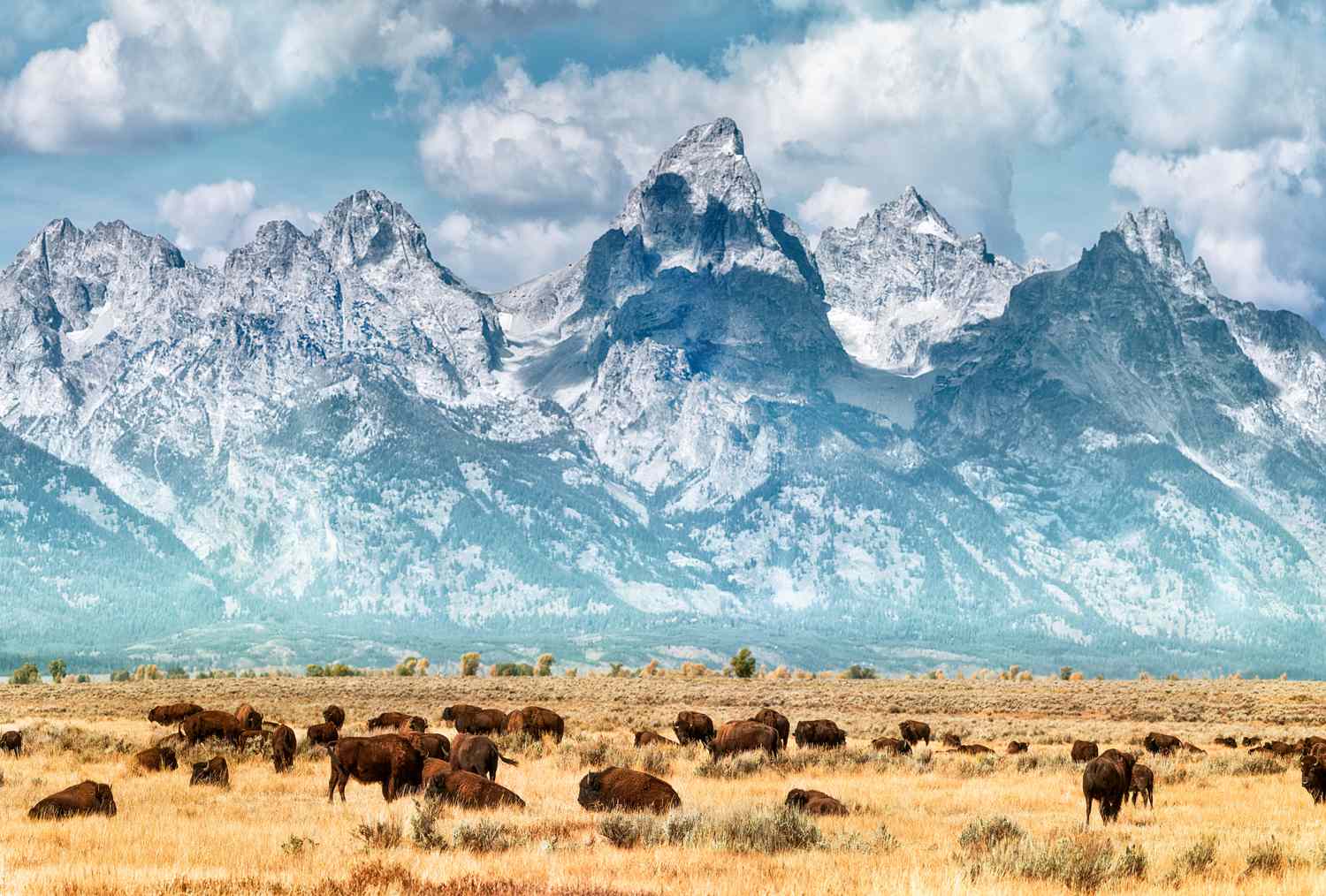
The term “safari” historically carried a specific geographic weight—a Swahili loanword denoting a journey, typically across the savanna landscapes of East Africa. Yet, the nomenclature has drifted. In the contemporary North American context, the safari has been re-contextualized not as a colonial relic, but as an exercise in high-fidelity wildlife observation. The shift is not merely linguistic; it is a fundamental transformation of the traveler’s intent. Where once the objective was trophy-centric, the modern ambition is proximity-centric—an attempt to witness apex predators, megafauna, and migratory patterns in a manner that feels both wild and sustainable.
Achieving this requires a sophisticated logistical framework. One does not simply “go on safari” in the American West or the Alaskan wilderness. One must curate an operational plan that accounts for seasonal migration, animal behavioral biology, and the complex governance of public and private land management. The proliferation of commercial operators offering wildlife “tours” has further clouded the market, making it difficult to distinguish between genuine, conservation-minded expeditions and superficial, high-volume excursions that prioritize guest satisfaction over ecological integrity.
To evaluate these opportunities requires the same analytical rigor applied to any high-stakes venture. Whether one is scouting wolves in the Lamar Valley, monitoring grizzly activity in the Alaskan interior, or participating in a private-reserve conservation project, the quality of the experience is governed by three variables: access, expertise, and ethics. The following analysis serves as an audit of the current landscape, intended to provide the clarity required to select and manage a true, high-value wildlife immersion.
Understanding “top safari experiences america”
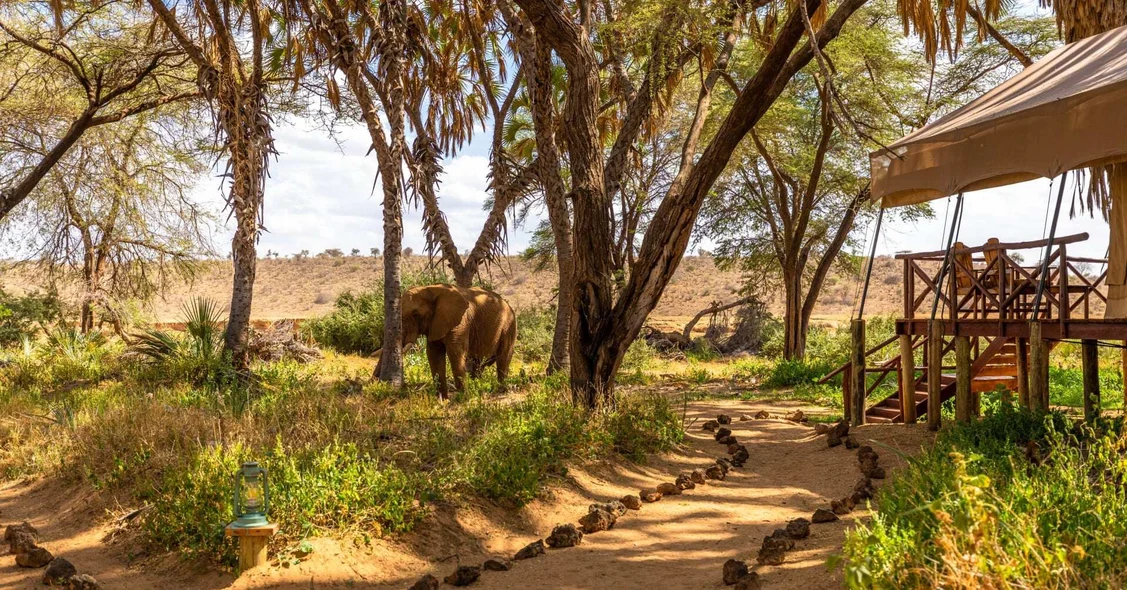
The search for the top safari experiences america provides is inherently fraught with definitions. Is a safari defined by the mode of transport—a converted Land Rover moving across a dusty trail? Or is it defined by the intensity of the wildlife engagement? The ambiguity here is a risk factor. Many operators leverage the term “safari” to charge a premium for what is effectively a glorified bus tour through a protected area.
True immersion involves a departure from the “drive-by” mentality. The most sophisticated encounters are those that prioritize passive observation over active pursuit. When we scrutinize the top safari experiences america currently sustains, we find a common denominator: the minimization of human footprint. These experiences are structured around the biology of the species, not the convenience of the guest. The failure to distinguish between “wildlife spotting” and “wildlife immersion” is the primary error in judgment for the novice planner. Spotting is passive; immersion requires a commitment to the rhythm of the ecosystem. Understanding this distinction is the prerequisite for moving from a tourist to an observer.
Deep Contextual Background
The evolution of wildlife tourism in the United States traces a trajectory from the utilitarian era—where wildlife was managed primarily for hunting or public spectacle—to the modern era of ecosystem management. Early 20th-century parks were often treated as menageries. It was not until the late 20th century, with the reintroduction of apex predators in the American West and the maturation of conservation biology, that the market demand for “safari-style” experiences began to take root.
This shift was enabled by systemic changes in land tenure. The rise of private conservation reserves—often working in tandem with the National Park Service—created a model where land is managed specifically for wildlife density rather than just recreational capacity. This synthesis of public stewardship and private operational agility has allowed for the development of high-density wildlife viewing zones that mirror the operational logic of African conservancies. The historical arc here is one of maturation: from exploitation to observation, and finally, to participation in the preservation of the species.
Conceptual Frameworks and Mental Models
Navigating the landscape of wildlife tourism requires specific mental models to filter out the noise of high-volume marketing.
-
The Anthropogenic Impact Index: This framework measures the level of wildlife disturbance caused by the experience. A “high-impact” safari—where vehicles approach too close, disrupting hunting or social patterns—is inherently inferior to a “low-impact” model, regardless of the price point.
-
The Probability-Reward Matrix: In wildlife, sightings are never guaranteed. The “best” experiences are those that maximize the probability of sightings through expert guiding, rather than those that promise “guaranteed” encounters, which often rely on baiting or artificial habituation.
-
The Habitat-Density Correlation: Wildlife is not uniformly distributed. This model assumes that the most successful expeditions are those focused on “bottlenecks”—riparian corridors, migration routes, and seasonal food sources—rather than broad, undifferentiated wilderness areas.
Key Categories and Operational Variations
The industry can be stratified into distinct operational models, each with specific trade-offs regarding accessibility and ecological integrity.
| Category | Typical Landscape | Operational Style | Risk Level |
| National Park Circuit | Public Land | High-volume/Road-bound | Low (Safety) |
| Private Reserve/Estate | Private Land | Low-volume/Off-road | Moderate (Cost) |
| Wilderness Expedition | Remote/Backcountry | Foot-based/High-effort | High (Physical) |
| Conservation/Research | Hybrid | Participation-based | Low (Ecological) |
When we evaluate the top safari experiences america offers, we must align the category with the objective. A public National Park circuit is ideal for the generalist, but for those seeking deep, uninterrupted engagement with behavioral biology, the private reserve or conservation research models are significantly more potent.
Detailed Real-World Scenarios
-
Scenario A: The Winter Wolf Expedition. A guest focuses on the Lamar Valley in Yellowstone during February. The constraint is extreme temperature and limited road access. The decision point is whether to rely on internal park transport or hire a private tracker who possesses the radio telemetry gear to locate packs outside the road system. The failure mode here is the “road-only” approach, which ignores the animal’s movement deeper into the interior.
-
Scenario B: The Private Conservation Tracking. A guest pays for access to a private reserve in Texas where exotic species are managed for conservation. The constraint is the “managed” nature of the land. The decision point is ethical: does the guest prioritize the proximity of the animal, even if the habitat is contained?
-
Scenario C: The Alaskan Coastal Expedition. A guest engages a fly-in lodge for bear viewing. The constraint is weather. The second-order effect is a 3-day grounded period. The planning failure is not building “buffer days” into the schedule, assuming the environment will cooperate with a linear itinerary.
Planning, Cost, and Resource Dynamics
The economic reality of these experiences often shocks the unprepared. High-quality wildlife encounters are resource-intensive.
-
Direct Costs: Guiding fees, specialized gear, logistics (bush planes, fuel), and access permits.
-
Indirect Costs: The “time-lost” factor. Expert tracking requires patience. A successful trip might include days of zero sightings. If the guest cannot afford the time, they cannot afford the safari.
-
The Variability Coefficient: Wildlife behavior is unpredictable. A trip can be a profound, life-altering event or a frustrating exercise in observation of empty terrain. Prudent planning demands a contingency fund for itinerary shifts.
| Resource Type | Variability | Management Strategy |
| Guiding/Tracking | High | Secure 6-12 months out |
| Logistics/Transport | Moderate | Buffer days included |
| Environmental/Weather | Extreme | Flexibility is the priority |
Tools, Strategies, and Support Systems
-
The “Local Tracker” Network: Bypass the general tourism agencies. Direct engagement with field biologists or specialized local trackers is the hallmark of the top safari experiences america provides.
-
Specialized Optics: A safari is an optical challenge. Investing in high-grade binoculars (8×42 or 10×42) and spotting scopes is non-negotiable.
-
The Off-Season Advantage: Wildlife is less tolerant of human presence when crowds are heavy. Scheduling outside peak tourist windows (e.g., late spring or late autumn) often yields superior behavioral observations.
-
Telemetry and Data Access: For research-linked safaris, understanding the basic telemetry data (if available) allows for a more “predictive” approach to tracking.
Risk Landscape and Failure Modes
Risk in wildlife tourism is often misunderstood. It is rarely the animal that poses the greatest threat; it is the environment and the human logistical system.
-
The “Proximity” Risk: The drive to get closer to the subject often results in human-wildlife conflict. An operator that encourages guests to bypass safety distances is a liability.
-
The Logistical Fragility: When traveling deep into wilderness areas, the supply chain is thin. A simple mechanical failure can become a critical safety incident.
-
The Cognitive Failure: The expectation that wildlife will “perform.” This leads to frustration, which in turn leads to risk-taking behavior (e.g., leaving the vehicle, trespassing).
Governance, Maintenance, and Long-Term Adaptation
A successful wildlife experience requires active management of the itinerary.
-
The Real-Time Pivot: If the primary target species is inactive, the itinerary must be adaptable. Does the operator have a “Plan B” (botany, landscape photography, local ecology)?
-
The Feedback Loop: Post-safari documentation is essential. If an operator failed to adhere to safety or ethical guidelines, this must be documented to prevent repeat interactions.
-
The Checklist:
-
Operational: Is the guide licensed and insured?
-
Ethical: Does the operator comply with all NPS/BLM wildlife viewing distance guidelines?
-
Technical: Is the photography equipment compatible with the shooting distance?
-
Measurement, Tracking, and Evaluation
Evaluation should focus on the quality of the engagement rather than the quantity of the sightings.
-
Leading Indicators: Quality of pre-trip briefings (Are they honest about the risks and the likelihood of sightings?), transparency regarding animal welfare, and clarity of the ecological ethics policy.
-
Lagging Indicators: The “behavioral depth” of the encounter. Did we see an animal, or did we observe an animal interacting with its environment?
-
Documentation Example: Maintain a “Behavioral Log.” Note not just the species, but the context: hunting, foraging, social interaction. This creates a record of the safari’s actual value.
Common Misconceptions and Oversimplifications
-
“More money equals more wildlife.” Money buys access and comfort, but it cannot dictate the behavior of a wild animal.
-
“Winter is dead.” Winter is often the highest-quality viewing time for predators, as their movements are restricted by snow and prey concentrations are predictable.
-
“It’s safe because it’s a tour.” Wildlife is unpredictable. The “safari” status does not negate natural instincts.
-
“I need to be a photographer.” While photography is common, the obsession with the “shot” often ruins the observation.
-
“All parks are the same.” Ecosystems vary wildly in density and behavior. A tour of one park provides zero predictive power for another.
Ethical and Contextual Considerations
The ethics of wildlife tourism are increasingly scrutinized. The core issue is the potential for habituation. When animals become accustomed to human presence, their survival instincts atrophy. Operators that facilitate habituation for the sake of guest gratification are arguably causing long-term harm to the population. A truly ethical safari provider prioritizes the animal’s right to ignore the human observer. If the animal changes its behavior (e.g., stops eating, flees, or exhibits stress) because of the guest, the interaction has failed the ethical test.
Conclusion
The pursuit of the top safari experiences america provides is an exercise in managing expectations and logistical precision. It requires a fundamental respect for the wildness of the landscape and the complexity of the organisms that inhabit it. By moving away from the consumerist desire for “guaranteed” encounters and toward an ethos of disciplined, ethical observation, travelers can participate in experiences that are both personally transformative and ecologically responsible. The best safari is not one that claims to own the wildlife; it is one that grants the observer the privilege of seeing a creature live its life, undisturbed and authentic.