Selecting Top Golf Retreats in America: An Operational Guide
The designation of a golf destination as “top-tier” is frequently an exercise in marketing rather than operational assessment. Public perception often conflates visual aesthetics with underlying quality, prioritizing a photograph of a dramatic cliffside green over the critical, invisible infrastructure that ensures the facility’s actual performance. A retreat is not merely a collection of holes in the ground; it is a complex, integrated ecosystem where hospitality management, agronomic science, and logistical throughput converge. For the discerning traveler, the distinction between a “popular” destination and a high-performance retreat is the difference between a scripted, high-turnover experience and a seamless, high-fidelity engagement.
True excellence in this sector requires an analytical approach that separates transient trends from enduring quality. This involves evaluating the facility not by its public relations narrative, but by its maintenance cycles, the consistency of its service culture, and the technical merit of its course architecture. When we examine the highest-performing assets in the national landscape, we find a shared commitment to a specific set of operational principles: the preservation of the playing surface under diverse climatic conditions, the calibration of service staffing ratios, and the mitigation of the inherent friction that accompanies high-volume travel.
The following analysis deconstructs these components. It is intended for individuals who treat their time and capital as strategic assets, requiring an objective framework to navigate the noise of a crowded, often homogenous travel market.
Understanding “top golf retreats in america”
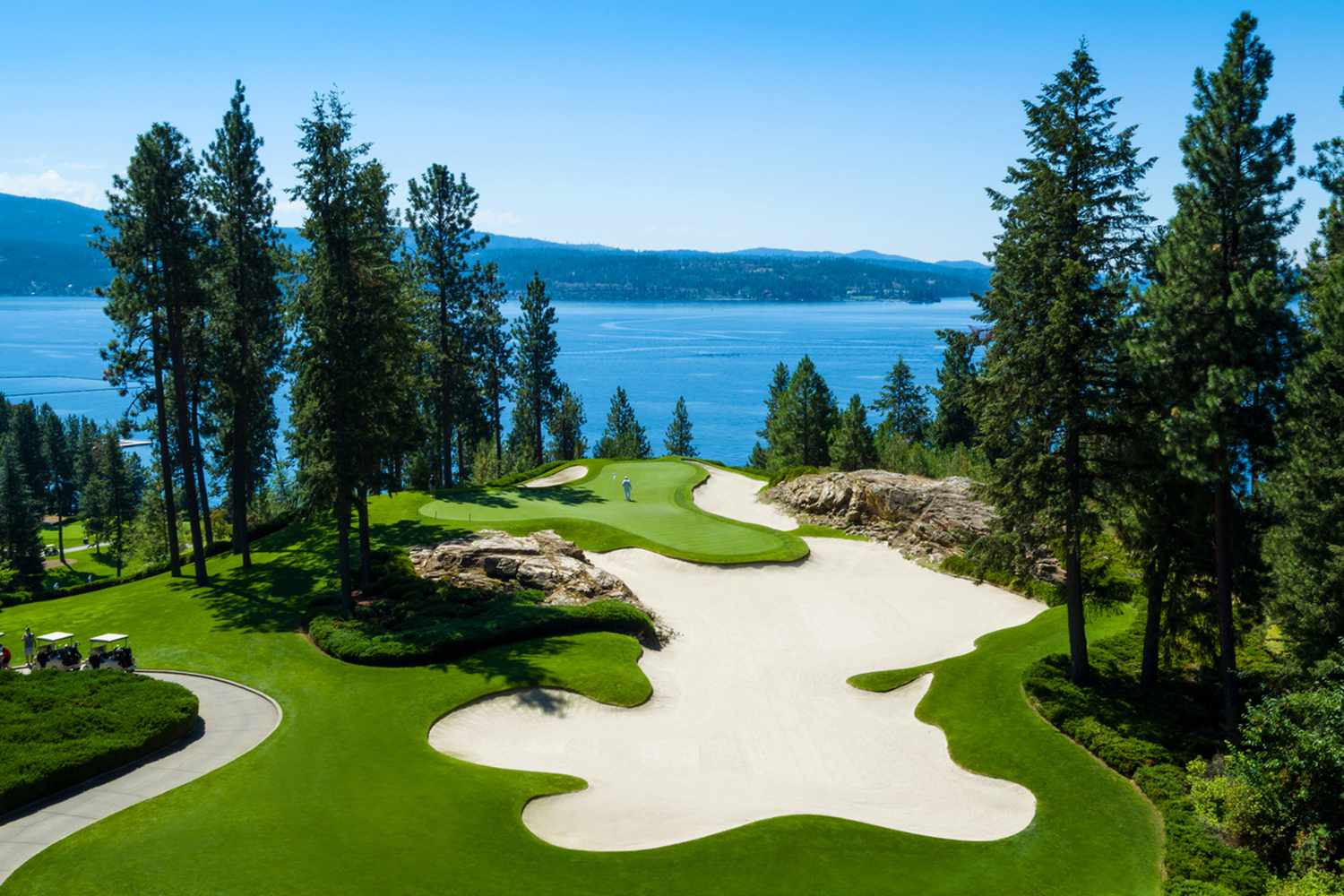
To arrive at a meaningful definition of top golf retreats in america, one must first strip away the subjective layering of “prestige.” A retreat qualifies as top-tier not because it hosts major championships, but because it delivers consistent, repeatable excellence regardless of the season or the occupancy load. The common misunderstanding is that high price points guarantee quality; in reality, many high-cost facilities suffer from deferred maintenance or service degradation due to the pressures of mass-market volume.
A rigorous definition encompasses three specific dimensions:
-
Agronomic Reliability: The course must present optimal playing conditions consistently, which requires sophisticated irrigation, drainage, and turf-management protocols.
-
Service-to-Guest Ratio: The facility must demonstrate the ability to scale service—caddie quality, clubhouse efficiency, and personal concierge availability—proportionate to the guest count.
-
Logistical Frictionless-ness: The capacity to move guests from arrival to the first tee without operational bottlenecks.
By analyzing top golf retreats in america through this triad, we identify a clear separation between “scenic vacation spots” and “professional-grade facilities.” The former relies on landscape architecture for value, while the latter relies on process engineering.
Deep Contextual Background
The evolution of the American golf retreat has tracked parallel to the development of the broader luxury real estate market. In the mid-20th century, the “country club” model was a private, exclusionary enclave; the concept of a “retreat” (a public-facing or semi-private destination resort) was relatively nascent. The 1980s and 1990s shifted this paradigm, as developers realized that golf, when combined with luxury lodging and conference capabilities, could serve as a powerful economic engine for regional tourism.
This period saw the rise of the “championship destination”—large-scale projects that leveraged famous architectural signatures (e.g., Fazio, Nicklaus) to draw international traffic. However, the 2008 financial correction and the subsequent maturation of the market forced a pivot. The current era is defined by the “boutique-professionalization” of the retreat. We are seeing a contraction of the “massive-resort” model in favor of more specialized, high-service facilities that prioritize agronomic health and data-driven guest management over pure scale. This is the current frontier of the industry.
Conceptual Frameworks and Mental Models
To evaluate these facilities objectively, one should utilize specific frameworks that bypass traditional marketing narratives.
-
The Agronomic Constraint Model: Turf is a living asset. The quality of a course is limited by the local environment (heat, humidity, soil composition). A facility in the desert operates on a different maintenance “budget” than one in the coastal Northeast. Evaluate the facility against its local environmental constraints, not against a universal, idealized standard.
-
The Throughput-Experience Inversion: As guest volume (rounds per day) increases, the experiential quality of the individual round decreases. The “best” retreats strictly cap their rounds to preserve the pace of play and the condition of the turf.
-
The Service-Infrastructure Balance: A facility with great architecture but mediocre service infrastructure (e.g., outdated clubhouse, poor locker facilities) will never reach top-tier status. Service must match the caliber of the golf.
By applying these lenses, one can discern why certain facilities are consistently ranked as top golf retreats in america, even if they lack the aggressive advertising spend of their larger competitors.
Key Categories and Operational Variations
Retreats are not monolithic; they serve distinct functions.
Realistic decision logic dictates that the choice of facility must be driven by the specific intent of the traveler. Attempting to host a high-efficiency business retreat at a landscape-centric wilderness facility is a mismatch of expectations and operational capabilities.
Detailed Real-World Scenarios
-
Scenario A: The High-Stakes Corporate Meeting. An organization requires a facility with significant on-site infrastructure (conference rooms, high-speed connectivity) coupled with high-level golf for relationship building. The facility must have a dedicated concierge team accustomed to managing non-golfing logistics for guests. A failure mode here is choosing a pure “golf-only” facility that lacks professional meeting support.
-
Scenario B: The Instructional Deep-Dive. A group of high-handicap players seeks a three-day intensive improvement experience. They require a facility with advanced technology (TrackMan, force plates, video analysis) and certified instruction. The course itself is secondary; the quality of the teaching staff is the primary operational KPI.
-
Scenario C: The Seasonal Pilgrimage. A regular foursome travels to coastal locations. They prioritize weather stability and agronomic condition (specifically firm, fast conditions). They choose locations that utilize specialized drainage systems to ensure playability even in shoulder seasons.
Planning, Cost, and Resource Dynamics
The economic analysis of these trips is frequently focused on green fees, which is a tertiary cost.
-
Direct Costs: Green fees, cart/caddie fees, accommodation, food and beverage.
-
Indirect Costs: Transit (private vs. commercial air), equipment logistics (club shipping vs. rental), and the opportunity cost of wasted time due to poor operational management.
-
The Variability Coefficient: High-end facilities operate with a “cost-plus” model—the premium paid covers the massive overhead of agronomic maintenance and staffing.
The top golf retreats in america are rarely the cheapest, but they often provide the highest value-per-dollar when operational consistency and time efficiency are factored into the equation.
Tools, Strategies, and Support Systems
-
Handicap Management Software: Used to verify the skill level of groups to ensure appropriate course assignment.
-
Agronomy Reports: Discerning travelers often request or research the current turf condition reports (e.g., green speed, aeration schedules) before booking.
-
Dedicated Travel Concierges: High-end providers who maintain direct lines to resort management to bypass standard reservation queues.
-
Club Shipping Logistics: Third-party services that ensure equipment arrives before the traveler, minimizing airport friction.
-
Private Ground Transport: A standard requirement for top-tier retreats, ensuring the transition from transit to course is managed professionally.
Risk Landscape and Failure Modes
The primary risks at any retreat are systemic rather than individual.
-
The “Over-Commitment” Failure: When a resort books too many rounds, causing pace-of-play to collapse. This destroys the experience for every guest, regardless of the quality of the course.
-
Agronomic Emergency: Unforeseen weather events (heatwaves, fungal outbreaks) that compromise green health. The best facilities have secondary maintenance plans; lower-tier facilities simply apologize.
-
The Service-Culture Decay: A common failure where a resort loses its senior management team, leading to a noticeable drop in service standards within a single season. This is why recurring due diligence is necessary.
Governance, Maintenance, and Long-Term Adaptation
Facilities that remain at the top do so through rigorous internal governance.
-
The Review Cycle: Facilities that are truly elite review their service scores and turf health daily.
-
Layered Checklists: Elite retreats employ a “zero-defect” policy for arrival experiences (e.g., clubs cleaned and staged, shoes polished, itinerary confirmed).
-
Adaptation Triggers: When a facility notes a consistent decline in pace-of-play metrics, they must be willing to reduce the number of tee times, even at a short-term revenue loss, to protect the long-term asset.
Measurement, Tracking, and Evaluation
Evaluation should move beyond qualitative reviews (which are often biased by weather or meal quality) to quantitative metrics.
-
Leading Indicators: Tee time availability, staff-to-guest ratios, historical green-speed consistency.
-
Lagging Indicators: Repeat booking rates (the most accurate proxy for quality), secondary spending on amenities, average pace of play.
-
Documentation Example: Maintain a “Facility Performance Log.” For regular travelers, tracking the consistency of a facility across multiple visits provides a clearer picture of their operational health than any public ranking ever could.
Common Misconceptions and Oversimplifications
-
“Public courses are inferior to private ones.” In the modern US landscape, several public-access facilities exceed the operational and agronomic standards of many private clubs.
-
“The most expensive facility is the best.” Price is a function of supply and demand, not necessarily service or maintenance quality.
-
“All major championship venues provide the same experience.” Venues that host majors are often in “recovery mode” for months, which can actually degrade the experience for the casual visitor.
-
“Caddies are universally consistent.” Caddie programs require immense management. At average facilities, caddies are contractors; at top facilities, they are a managed service line.
-
“Newer is always better.” Older facilities often possess mature infrastructure and routing that newer designs cannot replicate.
-
“Golf is the only factor.” In a retreat environment, the golf is merely the anchor. The “after-golf” environment dictates whether the trip is remembered as a highlight or a chore.
Ethical and Contextual Considerations
The land management aspect of golf is coming under increased scrutiny. Water usage, pesticide application, and land-use efficiency are central to the future viability of the industry. The top golf retreats in america are leaders in sustainability, utilizing drought-resistant grass varieties, water recycling systems, and wildlife conservation protocols. The modern traveler is increasingly looking for facilities that demonstrate stewardship over their local ecosystems. A facility that ignores its environmental responsibility is fundamentally mismanaging its most valuable asset: the land.
Conclusion
The pursuit of the top golf retreats in america is not a hunt for prestige; it is a search for operational competence. The facilities that deserve this designation are those that have optimized the intersection of hospitality, sport, and environmental management. They do not rely on hype. They rely on the quiet, rigorous application of professional standards—from the height of the rough to the efficiency of the check-in process. By approaching the selection process with an analytical mindset, the discerning traveler can bypass the surface-level marketing and identify the facilities that will genuinely provide a high-fidelity experience, time and again. Excellence in this space is rarely accidental; it is the product of continuous, meticulous design and execution.