Luxury Island Escapes United States: A Strategic Infrastructure Audit
The American coastline, spanning from the sub-arctic reaches of the Aleutians to the subtropical keys of the Atlantic, offers a topography of isolation that remains fundamentally misunderstood by the mass-market travel sector. When an entity seeks to engage with the most exclusive maritime environments, they are not simply booking a room; they are initiating a logistical engagement with a constrained, often fragile ecosystem. The concept of the “island escape” is frequently commodified, reduced to a collection of stock imagery and hyperbolic descriptors. In reality, the operational logistics of maintaining high-end hospitality in an insular environment—where the mainland supply chain is interrupted by necessity—constitutes a complex management challenge.
To approach these destinations with the expectation of a standard hotel experience is to fundamentally misjudge the nature of the environment. Insular properties operate as closed systems. Their independence is not merely a marketing feature; it is an engineering requirement. Whether through private power generation, desalination processes, or the complex coordination of maritime transport, the maintenance of the guest experience is entirely dependent on the robustness of the backend infrastructure. Therefore, evaluating a prospective destination requires an analytical approach that prioritizes operational reliability and sustainability over surface-level aesthetic appeal.
This article provides a structural audit of the sector. It serves as a definitive reference for those tasked with the procurement or planning of travel to these environments, focusing on the intersection of topography, infrastructure, and service delivery. By shifting the perspective from the consumer to the auditor, one gains a clearer understanding of what constitutes genuine exclusivity and sustainable operations in the maritime United States.
Understanding “luxury island escapes united states”
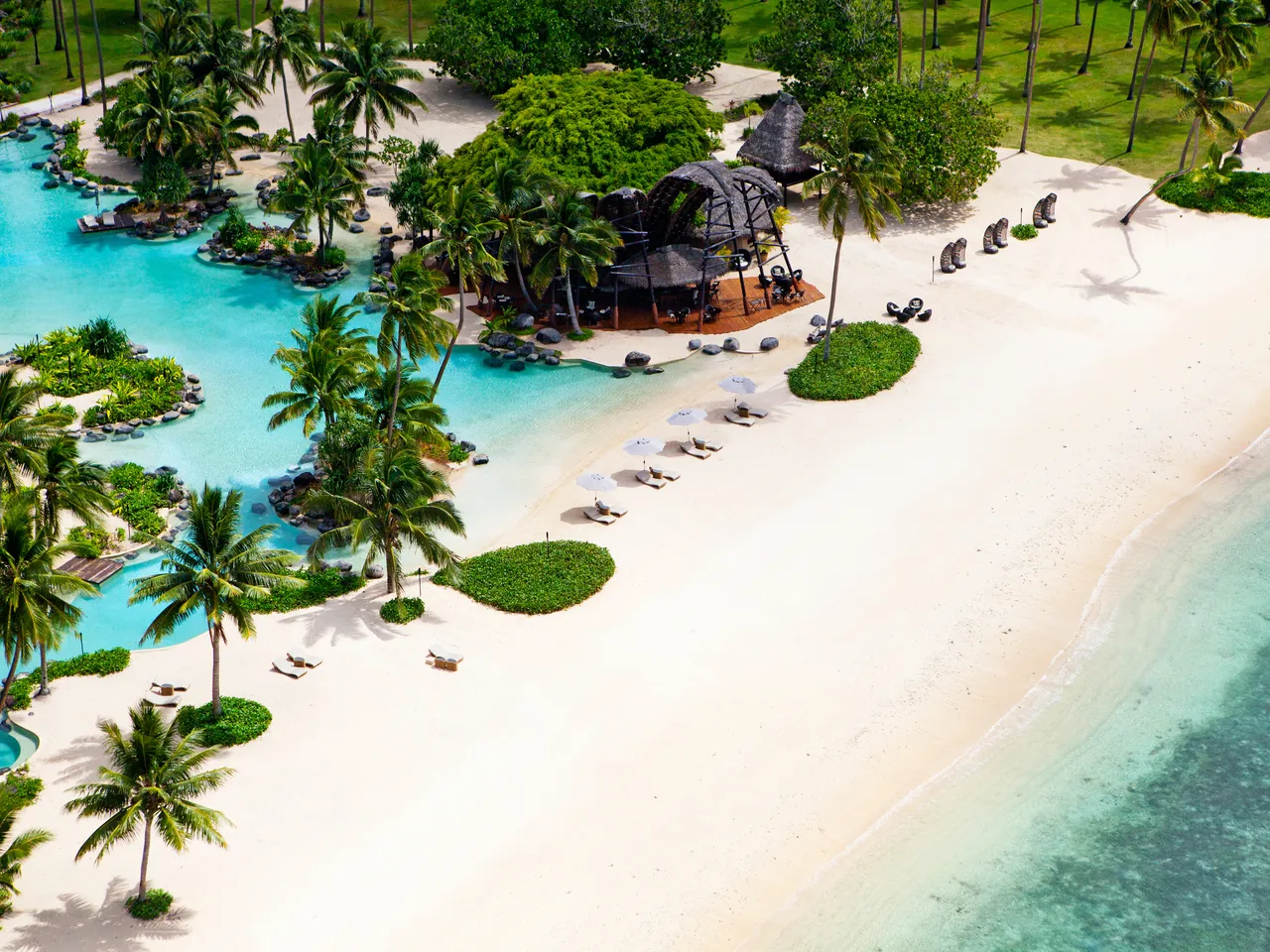
The terminology surrounding luxury island escapes united states markets often obfuscates more than it clarifies. The search for the definitive island experience is not an exercise in finding the most gilded interior; it is an investigation into the quality of the isolation.
A common error in judgment is to underestimate the impact of geographic isolation on service delivery. A property that operates efficiently in a major metropolitan hub faces a different set of challenges when transplanted to an insular environment. The infrastructure demands are extreme. When professionals compare luxury island escapes united states regions can offer, they are auditing the property’s resilience. Can the facility maintain the expected service standards during a two-week maritime storm that halts ferry or barge traffic? This level of operational redundancy is the true marker of a premium property, far more than the thread count of the linens or the provenance of the kitchen staff.
Deep Contextual Background
The trajectory of island development in the United States reflects a broader historical shift in the perception of land as an asset. In the early 20th century, insular properties were largely the domain of industrial magnates seeking private retreats—often utilitarian and rustic. The mid-to-late 20th century saw the professionalization of these spaces, as the hospitality industry recognized the potential for “seclusion-as-a-service.” This era prioritized the domestication of the wild; architecture focused on imposing modern comforts upon rugged terrain.
Today, the sector has entered an era of “managed stewardship.” Modern development is no longer about conquering the island landscape; it is about integrating the built environment into the ecological one. This shift is driven by both regulatory necessity and market demand. Environmental impact assessments have become significantly more stringent, requiring developers to employ advanced sewage treatment, renewable energy arrays, and sustainable building materials. The successful properties of this decade are those that have optimized their infrastructure to function as part of the ecosystem, rather than in opposition to it. Understanding this historical progression is vital: it explains why the most sought-after destinations are those that prioritize conservation, as they represent the most stable and long-term asset value in a volatile climate.
Conceptual Frameworks and Mental Models
To effectively navigate the acquisition of an island experience, one must employ frameworks that emphasize resilience and logistics over aesthetic whims.
-
The Logistical Friction Coefficient: This model posits that the cost and complexity of any service are directly proportional to the distance from the nearest mainland supply base. If a property requires daily barge deliveries for fresh produce, the probability of failure increases with every nautical mile. High-utility properties are those that have optimized their operations to reduce this coefficient.
-
The Environmental Carrying Capacity Model: This framework evaluates a property based on its ability to sustain its footprint without degrading the local ecology. A property that exceeds its carrying capacity—through over-tourism or inadequate waste management—is fundamentally undermining its own value proposition.
-
The “Independence of Assets” Model: This assumes that the most reliable properties are those that possess full autonomy over their essential utilities (energy, water, internet). Properties dependent on mainland cables or grid connections are inherently more fragile and prone to service disruption.
Key Categories and Operational Variations
The taxonomy of these destinations is broad, ranging from private estates to commercial resorts.
| Category | Accessibility | Infrastructure Autonomy | Service Model |
| Private Estate | Limited/Exclusive | Absolute | Bespoke/Staffed |
| Boutique Resort | Scheduled Boat | Moderate | Standardized/High-Touch |
| Public-Private Hybrid | Public Ferry | Low | Scaled/Commercial |
| Eco-Consolidation | Floatplane/Private | High | Research/Hospitality |
The realistic decision logic here is binary: if the objective is total control over the environment, the Private Estate model is the only viable path.
Detailed Real-World Scenarios
-
Scenario A: The Supply Chain Disruption. An island resort depends on a bi-weekly ferry for fuel and provisions. A winter storm forces a seven-day cessation of all maritime traffic. The failure mode is a depletion of reserves, leading to the cancellation of services. The success mode—exhibited by top-tier properties—is the maintenance of a 21-day “burn-rate” buffer for all critical supplies.
-
Scenario B: The Energy Failure. A resort relies on a sub-sea cable for power. An anchor strike severs the line. The property is forced into blackout. Properties with advanced governance, however, employ localized micro-grids with battery storage, ensuring that the guest experience remains untouched while the primary connection is repaired.
-
Scenario C: The Regulatory Constraint. A guest requests a high-impact event on an island with strict environmental covenants. The resort management, bound by conservation easements, must refuse. The failure here is a lack of alignment between the guest’s expectations and the property’s legal and ecological obligations.
Planning, Cost, and Resource Dynamics
The economic management of luxury island escapes united states locations is defined by the “premium of isolation.”
-
Direct Costs: The base room/estate rate, which is frequently inflated to cover the logistical overhead of staffing and transport.
-
Indirect Costs: The hidden premiums of island maintenance—fueling generators, paying hazardous duty premiums for essential staff, and the cost of specialized maintenance crews flown in from the mainland.
-
The Variability Coefficient: A sophisticated financial plan accounts for the seasonality of these costs. During high-risk weather months, insurance premiums and operational redundancy costs spike significantly.
| Cost Element | Visibility | Audit Frequency |
| Staging/Logistics | Low | Annual |
| Energy/Utility Ops | Moderate | Monthly |
| Staff Retention | High | Quarterly |
| Asset Maintenance | Low | Bi-Annual |
Tools, Strategies, and Support Systems
The procurement of these experiences should involve a structured audit process.
-
Independent Infrastructure Audit: Engage consultants to verify the property’s utility independence. Are the generators redundant? Is the desalination system scalable?
-
The “Last-Mile” Redundancy Check: Confirm that the property has multiple avenues for access (e.g., helicopter pad in addition to deep-water dock).
-
Local “Fixer” Networks: Establish a relationship with the island’s primary logistics manager, not just the front-of-house concierge. They control the flow of goods and personnel.
-
Weather Contingency Dashboards: Utilize professional tracking tools that provide real-time updates on marine and aviation conditions in the specific micro-climate of the island.
-
Digital Itinerary Platforms: Use centralized collaboration tools to manage the logistics of multi-party arrivals, as small island airports/docks lack the throughput capacity of mainland hubs.
Risk Landscape and Failure Modes
Risk in island environments is cumulative and systemic, often manifesting in unexpected ways.
-
Climate Resilience: Properties situated at low elevations are increasingly vulnerable to storm surges. A luxury destination that ignores long-term sea-level rise modeling is a temporary asset, not a legacy one.
-
Labor Vulnerability: The inability to house staff on-island creates a reliance on transport. If the transport is unreliable, the staff is unreliable. The highest-performing properties are those that provide high-quality on-island staff housing, ensuring a 24/7 labor pool.
-
Regulatory Drift: Environmental regulations concerning protected areas are tightening. A property that is currently compliant may find itself in violation within a five-year cycle if it has not proactively managed its ecological footprint.
Governance, Maintenance, and Long-Term Adaptation
Governance of these assets requires a “board-level” oversight process.
-
Annual Review Cycles: Treat the property as a critical infrastructure unit. Evaluate the cost-per-guest against the maintenance of the underlying systems.
-
Adjustment Triggers: If the local ecosystem shows signs of degradation—e.g., beach erosion or habitat loss—the management must trigger an immediate re-evaluation of the property’s footprint.
-
The Layered Checklist:
-
Ecological: Are waste management protocols exceeding the required minimums?
-
Financial: Are the maintenance reserves adequately capitalized to handle catastrophic infrastructure failure?
-
Strategic: Does the property’s long-term roadmap align with regional climate projections?
-
Measurement, Tracking, and Evaluation
Evaluation must rely on both qualitative and quantitative indicators.
-
Leading Indicators: The responsiveness of the management team to logistical requests and the frequency of “downtime” for essential services (water/power).
-
Lagging Indicators: The “Service-to-Isolation” ratio. If the property consistently requires significant effort from the guest to manage logistics, it is not functioning as a luxury asset.
-
Documentation Example: Maintain a “Logistical Performance Ledger.” Record the mission profile, the supply chain efficiency, the communication protocols, and the variance from the projected operational budget.
Common Misconceptions and Oversimplifications
-
“Privacy is absolute.” Privacy is a function of land management, not just distance. A large island with high-density development offers less privacy than a small, heavily restricted estate.
-
“The price includes everything.” In island logistics, there is always a “hidden” layer of transport, transfer, and staging fees.
-
“Newer is better.” Newer infrastructure is beneficial, but only if it has been “stressed” by a full weather cycle. An older property with proven, storm-tested systems is often a safer bet.
-
“You can just build what you want.” Coastal and island development is among the most heavily regulated sectors in the US. Approvals for expansion are rare and arduous.
-
“The boat is always waiting.” Logistics in remote areas are governed by tides, weather, and operator availability. Rigid adherence to schedules is a recipe for failure.
-
“Sustainability is optional.” In an island environment, sustainability is survival. A property that wastes water or energy is actively draining its own viability.
Ethical and Contextual Considerations
The environmental footprint of utilizing island properties is increasingly central to their valuation. A sophisticated audit of luxury island escapes united states destinations involves scrutinizing the property’s engagement with local community and conservation efforts. Are they supporting local marine life protection? Do they employ local labor, or do they import all personnel? The most robust properties are those that exist in a symbiotic relationship with their host environment.
Conclusion
The pursuit of the best luxury island escapes united states regions can offer is, at its core, a test of operational coordination and ecological sensitivity. It requires an analytical commitment to viewing an island destination not as an ephemeral getaway, but as a critical node in a larger environmental and logistical system. By prioritizing infrastructure integrity, anticipating the failure modes inherent in maritime supply chains, and maintaining a disciplined approach to ecological stewardship, travelers and developers alike can participate in experiences that are both personally transformative and systemically responsible. There is no off-the-shelf “perfect” destination. There is only the best operational architecture—one that aligns with the specific environmental and logistical realities of the location. Mastery lies in the continuous evaluation, auditing, and alignment of the property’s systems.