Luxury Business Travel America: Operational Efficiency and Strategic Mobility
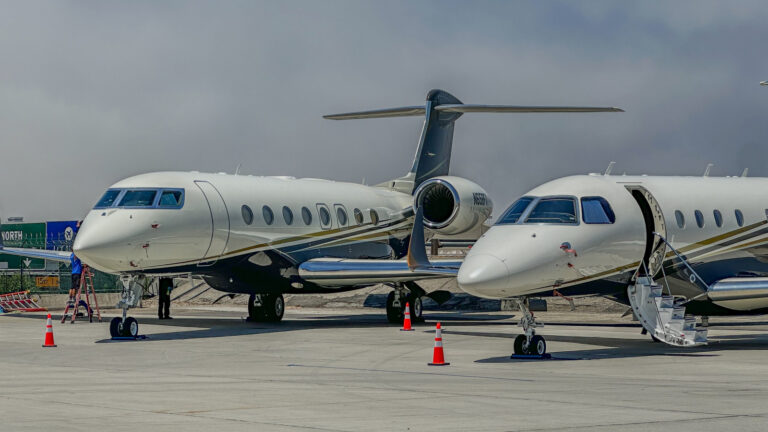
The discourse surrounding high-end corporate movement is frequently bifurcated into two simplistic narratives: the cinematic portrayal of status-driven indulgence and the critical assessment of corporate expenditure. Both frameworks fail to capture the essential reality of the contemporary American landscape. For the high-velocity enterprise or the multi-generational family office, the utilization of elite transit is not a luxury good in the consumer sense; it is a vital operational tool. It is the compression of distance and the mitigation of the logistical friction that inevitably degrades the decision-making capacity of key human assets.
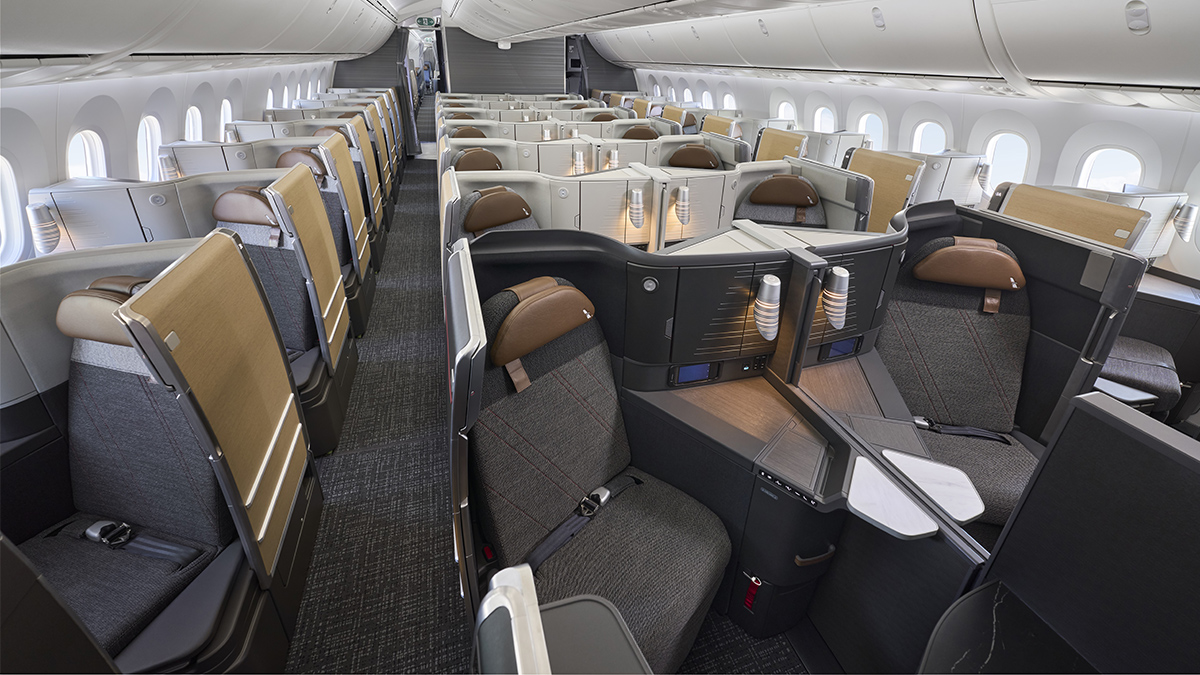
To treat high-level corporate mobility as an expense category to be trimmed is to misunderstand its function as an efficiency multiplier. When an executive or a specialized team is required to engage in complex, cross-continental negotiations or crisis management, the cost of their time—and the cognitive load imposed by standard commercial infrastructure—far exceeds the incremental cost of premium logistical solutions. The modern organization does not buy access to a larger seat or a quieter cabin; it buys the preservation of bandwidth. It buys a predictable, shielded environment where the transit phase is treated as a seamless extension of the office, rather than a disruption of it.
This article examines the structural underpinnings of this sector, prioritizing operational methodology over surface-level aesthetics. We shift the focus from the “experience” of travel to the “utility” of movement, analyzing how organizations leverage infrastructure, policy, and resource allocation to maintain a competitive advantage in a volatile, distributed economy.
Understanding “luxury business travel america”
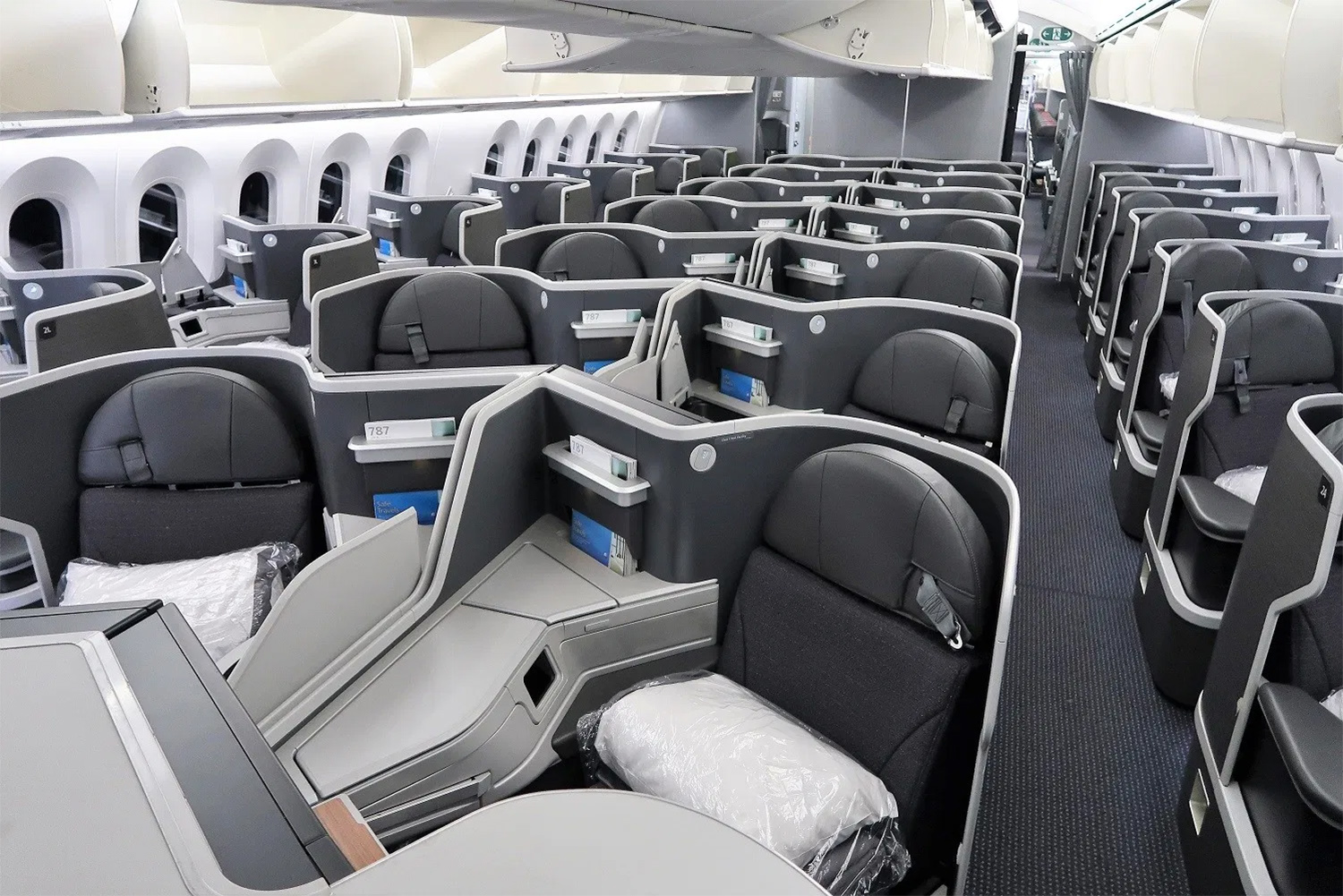
The term luxury business travel america is often misapplied in consumer media to describe leisure activities masquerading as corporate endeavors. In an analytical context, however, the term refers to a specific subset of logistical operations where the priority is not comfort, but continuity. The common misunderstanding is that luxury is defined by the quality of the amenity. In truth, luxury is defined by the absence of dependency on public-facing infrastructure. The true luxury of high-tier corporate movement is “independence from the queue.”
When analyzing luxury business travel america, one must move past the focus on gold-plated fixtures and focus on “operational resilience.” A truly optimized travel itinerary—whether it involves private aviation, chauffeured ground logistics, or elite-tier commercial concierge management—is designed to eliminate the variables of delay, congestion, and information asymmetry. The oversimplification risk lies in assuming that “more expensive” equates to “better.” A private flight that lands at a congested major hub where the passenger sits for an hour on the tarmac waiting for ramp space is a failure of operational planning, regardless of the aircraft’s hourly rate. True luxury in this space is a frictionless, predictable, and defensible workflow.
Deep Contextual Background
The trajectory of corporate mobility has evolved from the “Golden Age” of commercial flight in the mid-20th century to the current era of hyper-distributed, high-agility operations. Post-WWII, the corporate aircraft—and the premium commercial class—were symbols of American industrial dominance. They were tools used to project presence across a manufacturing-heavy economy. As the economy pivoted toward knowledge work and decentralized services in the late 1990s and 2000s, the requirements for movement changed.
The systemic shift accelerated during the early 2020s. Organizations that previously viewed high-end travel as a discretionary perk were forced to re-evaluate it as a risk-mitigation strategy. The unreliability of the commercial airline grid—susceptible to labor shortages, weather-related systemic failures, and security bottlenecks—exposed the fragility of relying solely on mass-transit infrastructure. This prompted a move toward “Integrated Mobility Models,” where the travel department became as critical as IT or HR, tasked with ensuring the absolute availability of key human capital. We have transitioned from an era of “travel as status” to an era of “travel as continuity.”
Conceptual Frameworks and Mental Models
To navigate the complexities of this sector, one must employ models that decouple the act of moving from the act of traveling.
-
The Time-Asset Equilibrium: This model dictates that the ROI of any travel expenditure is measured by the delta between “time in transit” and “time in productive state.” If a travel solution increases transit time but decreases cognitive fatigue, it is a net positive.
-
The Logistical Friction Multiplier: Every touchpoint in a travel itinerary—airport security, gate changes, taxi queue—is a friction event that consumes mental bandwidth. The goal of high-tier planning is to reduce the friction multiplier to as close to zero as possible.
-
The Scalable Redundancy Framework: Elite mobility is never singular. It is always plural. A robust travel strategy requires secondary and tertiary options (e.g., an alternate FBO, an emergency ground-transport contingency, a backup communication protocol) so that the failure of one system does not result in the failure of the mission.
These frameworks allow organizations to stop asking “What is the best deal?” and start asking “What is the most resilient path?”
Key Categories and Operational Variations
The modern landscape of luxury business travel america is segmented not by comfort levels, but by the operational objectives of the mission.
| Category | Primary Metric | Operational Flexibility | Capital Commitment |
| Mission-Critical (Jet/Private) | Throughput/Time | Absolute | Extreme |
| Executive Continuity (Fractional) | Availability | High | High |
| Concierge-Commercial | Efficiency/Cost | Moderate | Low |
| Mobile-Office (Ground-Dominant) | Connectivity/Focus | High | Moderate |
Realistic decision logic dictates that organizations should mix and match these categories. A “Mission-Critical” jet is unnecessary for a regional sales meeting, just as “Concierge-Commercial” is inadequate for a cross-country M&A sprint. The most sophisticated firms maintain a portfolio of options, choosing the vehicle based on the objective, not the executive’s title.
Detailed Real-World Scenarios
-
Scenario A: The M&A Crisis. An organization must place a team of four in three different cities over a 72-hour period to finalize an acquisition. Commercial travel makes this impossible due to flight frequency and airport downtime. The organization utilizes an on-demand charter model, focusing on smaller “reliever” airports to bypass major hub congestion. The second-order effect is the team arriving rested and prepped, rather than exhausted.
-
Scenario B: The Global Executive Security Protocol. An executive is traveling to a region with high geopolitical volatility. The strategy is not comfort; it is “hardened mobility.” This involves armored ground transit, vetted drivers, and an itinerary that is never finalized until the last possible moment to prevent surveillance. The failure mode here is a standardized “luxury” itinerary that is too predictable and exposes the executive to risk.
-
Scenario C: The Peak-Season Gridlock. A high-level team needs to move during a holiday travel peak. Commercial airports are at capacity. The organization leverages a pre-contracted fractional card program that guarantees access regardless of fleet saturation. The cost is high, but the “cost of failure” (missing the client meeting) is exponentially higher.
Planning, Cost, and Resource Dynamics
The economic analysis of high-end travel is frequently miscalculated because stakeholders fixate on the “ticket price” rather than the “total cost of interruption.”
-
Direct Costs: Asset lease, fuel, hangarage, premium booking fees.
-
Indirect Costs: The “Hidden Cost of Friction.” A delayed flight for a high-value executive creates a ripple effect: missed deadlines, stressed support teams, and loss of competitive advantage.
-
The Variability Coefficient: In the sector of luxury business travel america, fixed costs (membership dues, management fees) are often the baseline. The variable costs (fuel surcharges, taxi-time fees, parking) are where the budget is won or lost.
| Cost Element | Visibility | Ability to Control |
| Core Asset/Access | High | Low (Fixed) |
| Logistical Support | Moderate | High |
| Opportunity Cost | Low | High |
The objective is to shift costs from “variable/unexpected” (like emergency last-minute bookings) to “fixed/predictable” (like pre-negotiated corporate rates or membership programs).
Tools, Strategies, and Support Systems
-
Aviation/Travel Tax Counsel: Essential for determining if costs can be depreciated as business expenses, which significantly alters the net-of-tax cost.
-
Fractional/Card Audits: Quarterly reviews to ensure usage aligns with the initial contract. Many organizations pay for hours they do not use.
-
Hangar-Base Intelligence: A strategy where the organization leases or maintains specific infrastructure at a base airport, reducing the “deadhead” costs of ferrying aircraft.
-
Security/Vetting Platforms: Digital tools that vet the background of drivers, security details, and local fixers in real-time.
-
Direct-Line Concierge Networks: Bypassing standard reservation systems to ensure that in the event of an disruption, the organization is “first in line” for re-accommodation.
Risk Landscape and Failure Modes
Risk in high-end mobility is rarely an accident; it is the accumulation of systemic failures.
-
Infrastructure Saturation: When an airport hits its movement capacity, service quality collapses, leading to long taxi times and aircraft damage.
-
The “Habit Trap”: Using the same FBO or airline route for years without auditing its current performance. A formerly reliable hub can become a bottleneck due to local changes in commercial traffic or zoning.
-
Security Drift: Assuming that because a vendor was safe three years ago, they are safe today. The security landscape shifts rapidly; regular re-vetting is mandatory.
Governance, Maintenance, and Long-Term Adaptation
Governance of these assets requires a “managerial” approach, not a “consumer” one.
-
Operational Audits: Regular review of flight department performance data. If a specific hub shows a 15% delay rate over 12 months, the flight department must investigate whether to switch to a secondary hub in the region.
-
Adaptation Triggers: When a firm’s business travel pattern shifts—for example, moving from regional sales visits to global M&A activity—the mobility strategy must pivot immediately.
-
The Layered Checklist:
-
Quarterly: Review fuel surcharges and handling fee structures.
-
Annually: Assess the stability of the organization’s long-term mobility master plan.
-
Triennially: Re-evaluate the entire regional airport strategy.
-
Measurement, Tracking, and Evaluation
Efficiency should be measurable and aligned with corporate KPIs.
-
Leading Indicators: Average “chock-to-chock” time, ramp-to-runway taxi time, and frequency of ground-handling service requests.
-
Lagging Indicators: Total Cost per Flight Hour (CPFH) attributed to ground delays, passenger feedback scores regarding transit-to-terminal experience, and historical reliability data.
-
Documentation Example: Maintain an “Mobility Performance Scorecard” for the company’s top 10 frequently visited cities. This provides hard data to the board when justifying the use of a more expensive travel solution.
Common Misconceptions and Oversimplifications
-
“The closest airport is always the best.” Geography is a factor, but operational speed often beats proximity. A slightly further airport with zero taxi congestion is almost always faster.
-
“All FBO chains are the same.” Service consistency varies by station. The local management team is the variable, not the national brand.
-
“You can’t change your strategy.” Organizations fall into the “habit trap,” using the same travel providers for decades even when better options have opened nearby.
-
“Private aviation is for status.” It is an industrial tool for throughput. Confusing the tool with the symbol is a strategic error.
-
“Newer infrastructure is always better.” Newer facilities often lack the established service ecosystems and optimized transit routes of legacy airports.
-
“The ‘Best’ is a static ranking.” The best solution today may be the worst tomorrow if your business travel pattern shifts or local regulations change.
Ethical and Contextual Considerations
The expansion of high-end aviation is subject to public scrutiny, particularly regarding carbon footprint. The leaders in luxury business travel america are those that are actively engaging in the transition to Sustainable Aviation Fuel (SAF) and carbon-offsetting initiatives that are verifiable, not just performative. Forward-thinking organizations are prioritizing their patronage of transit hubs and providers that demonstrate a commitment to these initiatives, aligning their logistical needs with their corporate social responsibility goals.
Conclusion
The pursuit of high-utility corporate transit is, at its core, a search for operational certainty. It requires an analytical commitment to viewing mobility not as a destination, but as a critical node in a larger business strategy. By understanding the interplay of throughput, service culture, and infrastructure resilience, organizations can move from a reactive travel posture to a proactive one. The entities that master this—those that treat their movement with the same rigor they apply to supply chain management—are the ones that secure a genuine, long-term competitive advantage. There is no singular “best”; there is only the right fit for the specific operational mission of the organization. Mastery lies in the continuous evaluation and alignment of that fit.