Assessing the Top Ski Destinations in America: An Analytical Framework
The evolution of the ski resort from a localized, community-driven sporting site to a multi-national, high-capacity infrastructure project marks one of the most significant shifts in recreational economics. In the American context, the mountain resort is rarely a wild, untouched environment; it is a meticulously engineered landscape designed to manage the flow of thousands of people, navigate the uncertainties of climate, and maintain a delicate balance between guest density and perceived wilderness. Evaluating these locations requires a departure from the consumer perspective—which focuses on brand and aesthetics—and a move toward an operational understanding of how these mountains function as logistical systems.
When analyzing the landscape of mountain tourism, it becomes clear that what separates a high-performing resort from a failing one is rarely just the quality of the snow, which is, after all, a variable beyond human control. Instead, the differentiation lies in the capacity for snow management, the efficiency of lift architecture, and the ability to mitigate the bottlenecks created by human traffic. The selection of a destination involves navigating a complex matrix of access, terrain topography, and the specific micro-climates that determine whether a resort can offer reliable operations throughout the season.
This assessment is not intended as a travel guide or a promotional roadmap for the recreationalist. Rather, it serves as a structural breakdown of the North American mountain market. It examines how geography, climate, and capital investment converge to create environments that facilitate high-performance skiing and riding. For those charged with planning corporate retreats, high-end travel portfolios, or simply seeking to understand the mechanics of this industry, this analysis provides the necessary data points to evaluate the viability and performance of these sites as functional assets.
Understanding “top ski destinations in america”
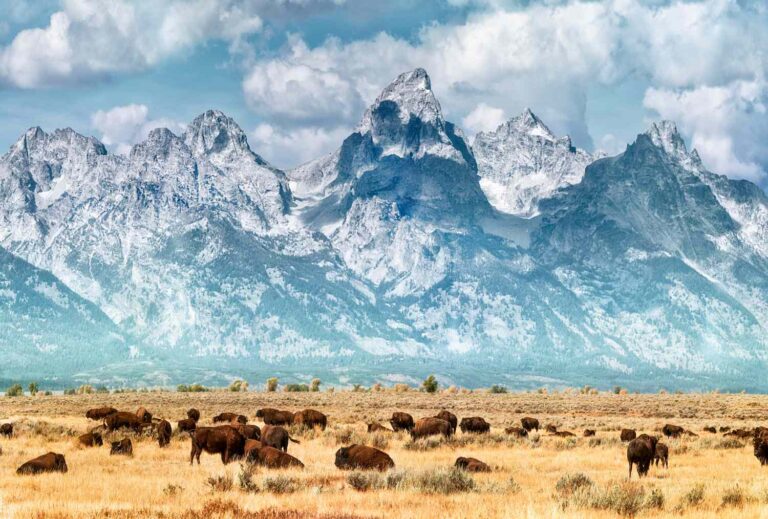
To approach the subject of the top ski destinations in america, one must acknowledge the inherent bias in the definition of “top.” If the metric is acreage, the result points to the massive, sprawling complexes of the Intermountain West. If the metric is the technical challenge of the terrain, the result shifts to the steep, maritime-influenced ranges of the Pacific Northwest or specific faces in the Tetons. metric is the efficiency of the “guest experience”—a euphemism for queue management and service hospitality—the focus turns toward the ultra-managed private-style resorts in the Rockies.
The danger of oversimplification is high here. A resort that is objectively “the best” for a family seeking a structured, seamless learning environment is functionally “the worst” for an expert seeking unmanaged, high-consequence big mountain terrain. Therefore, any analysis of these sites must be grounded in the user’s operational requirement. The most common mistake in this discourse is the assumption that resort quality is a monolithic, universally applicable value. In truth, the American ski market is a spectrum of environments, each optimized for a different set of inputs and desired outputs. One does not compare a logistical throughput machine optimized for volume with a boutique mountain optimized for technical elevation; they are different categories of asset.
Deep Contextual Background
The development of the American ski industry accelerated post-World War II, driven by the surplus of alpine equipment, the expansion of the interstate highway system, and the democratization of leisure time. Early resorts were often decentralized, localized affairs, utilizing rudimentary lift technology and minimal infrastructure. The late 20th century saw the consolidation of these entities, as the massive capital required to maintain high-speed, detachable lift networks and advanced snowmaking infrastructure incentivized the formation of large corporate holding companies.
This consolidation shifted the industry from a collection of “ski hills” to “mountain resorts.” The distinction is not semantic; it describes a fundamental change in business model. A ski hill sells access to the mountain. A mountain resort sells a holistic experience, encompassing lodging, dining, and internal logistics. This systemic shift has led to the current state where the most viable properties are those with the capital depth to survive the increasing volatility of seasonal weather patterns. The infrastructure now functions as an industrial-scale mitigation system against the unpredictability of natural snowfall.
Conceptual Frameworks and Mental Models
When evaluating where to commit resources for mountain-based activities, apply these frameworks to cut through the marketing noise that often obscures the operational reality of the top ski destinations in america:
-
The Terrain-Capacity Ratio: A resort can be vast, but if the lift capacity is insufficient to clear the base area, the “effective” skiable terrain is reduced to whatever can be accessed without a thirty-minute wait. Evaluate resorts by how they move people, not just by their total acreage.
-
The Maritime-Continental Gradient: Resorts on the West Coast benefit from the “Deep and Wet” snowpack, which is generally more resistant to seasonal temperature fluctuations. Inland resorts (Rockies) benefit from “Light and Dry” snow but are more susceptible to prolonged cold spells and lack the sheer volume of precipitation.
-
The Infrastructure Maturity Model: Resorts can be categorized by where they sit on the maturity curve: Frontier (minimal lift infrastructure, focus on raw terrain), Developed (comprehensive lifts, on-mountain amenities), and Corporate (high-capacity, high-tech systems designed for throughput).
Key Categories and Operational Variations
We can categorize the North American ski landscape into distinct functional clusters, each presenting unique trade-offs for the visitor.
| Category | Typical Profile | Primary Constraint | Best For |
| Big Mountain | Massive vertical, high-alpine | Altitude, weather stability | Technical, expert terrain |
| Family-Optimized | Groomed, structured | Crowd management | Learning, consistency |
| Urban-Adjacent | High-density access | Variable weather, crowds | Quick access, high frequency |
| Boutique/Steep | Low throughput, high challenge | High consequence terrain | Specialized expert usage |
The decision logic here is binary: does the mission require terrain optimization or capacity optimization? Attempting to find a location that perfectly optimizes both usually leads to a compromised experience. Recognizing that top ski destinations in america often specialize in one direction allows for more accurate planning.
Detailed Real-World Scenarios
-
Scenario A: The Multi-Day Expert Mission. An expert group requires maximum vertical drop and challenging, non-groomed terrain. Choosing a resort with “family-optimized” groomers is a failure of objective matching. The second-order effect is wasted resources and underutilized skill sets.
-
Scenario B: The High-Volume Holiday Trip. A group travels during peak holiday weeks. If they choose a resort without high-capacity lift infrastructure, the result is a failure of time management—spending 70% of the day in lift lines. This is a common failure mode in less-developed areas.
-
Scenario C: The Weather-Sensitive Planner. A group seeks guaranteed conditions. By choosing a high-elevation, cold-climate resort in the Rockies rather than a low-elevation, maritime-influenced resort, they reduce the risk of “rain-on-snow” events, which can destroy the base layer.
Planning, Cost, and Resource Dynamics
The economics of these destinations are increasingly driven by the “Pass Ecosystem.” Access is no longer a transactional purchase of a daily lift ticket; it is a subscription-based model.
-
The Subscription Trap: Buying an “unlimited” pass does not guarantee access if the resort implements reservation systems or if the infrastructure cannot handle the surge in pass-holder volume.
-
The Opportunity Cost of Distance: For most travelers, the cost of the lift ticket is secondary to the cost of transport and lodging. A resort that is difficult to access via airport transfer effectively doubles the “real” cost of the trip.
-
Predictability vs. Volatility: The budget must account for “in-resort” inflation. Prices for food and services at major resorts are decoupled from the local economy, functioning as a closed-loop micro-economy.
Tools, Strategies, and Support Systems
-
Snow-Water Equivalent (SWE) Monitoring: Use regional hydro-data rather than resort marketing snow reports. This provides the most accurate view of actual base depth.
-
Topographic Analysis Software: Utilize mapping tools to identify the percentage of terrain that aligns with the intended skill level. Do not rely on “acres of terrain” numbers, which are notoriously massaged by marketing departments.
-
Local Weather Micro-sites: The major forecasting services often lack the granular resolution for high-altitude micro-climates. Use regionally specific weather stations.
-
Reservation/Capacity Forecasting: Analyze historical traffic patterns for specific dates. Even the best resorts suffer from “over-tourism” on holiday weekends.
Risk Landscape and Failure Modes
Mountain environments are inherently hazardous, and the management of these hazards is the primary function of the resort. Understanding the risk landscape is essential when evaluating the top ski destinations in america.
-
Terrain Traps: Areas where geography creates high-consequence consequences (avalanches, cliffs, tree wells). These are often marked as “in-bounds,” leading to a false sense of security.
-
The “Crowd-Safety” Nexus: Overcrowding on intermediate runs increases the statistical probability of collision.
-
Altitude-Related Incident: A significant percentage of travelers suffer from Acute Mountain Sickness (AMS). Resorts at elevations above 8,000 feet require specific acclimation protocols that are rarely communicated effectively to guests.
Governance, Maintenance, and Long-Term Adaptation
The resorts are not static; they are under constant governance and maintenance. This includes:
-
Grooming Protocols: Understanding that grooming is a maintenance activity, not a static state. High-quality resorts groom 24/7.
-
Snowmaking Density: Evaluate resorts not just by “acres of snowmaking,” but by the density of that snowmaking—can they create a base in 48 hours of cold temperatures?
-
Monitoring Cycles: Effective resorts utilize automated snow-depth sensors to direct grooming assets. If a resort is still doing this manually, they are behind the curve of operational efficiency.
Measurement, Tracking, and Evaluation
Evaluation must move beyond qualitative “vibes.” One must track specific operational metrics to gauge the health of the destination.
-
Leading Indicators: Lift ticket prices vs. lift capacity. If ticket prices rise while lift infrastructure remains static, the “value per run” is declining.
-
Lagging Indicators: The number of days the resort closes terrain due to “lack of coverage” vs. “high wind.” One indicates operational failure; the other indicates environmental reality.
-
Documentation Examples: Maintain a log of “Vertical Feet Skied per Hour” (VFSH). This is a precise metric for measuring the efficiency of the lift-to-terrain ratio, which is often a better indicator of quality for the top ski destinations in america than total acreage.
Common Misconceptions and Oversimplifications
-
“High altitude is always better.” Altitude increases the risk of AMS and decreases oxygen for physical exertion. For some, lower-elevation resorts are physically superior.
-
“The marketing map represents the skiable area.” Marketing maps often include “gladed” or “off-piste” terrain that is essentially unskiable for 90% of the population.
-
“More snow is always better.” Excessive snowfall requires massive resource diversion to clear parking lots and stabilize slopes, often leading to closures.
-
“Ski-in/Ski-out is the gold standard.” It often comes with a significant price premium that may not be justified if the resort has an efficient shuttle or lift system.
-
“East Coast skiing isn’t worth it.” The East Coast possesses the most sophisticated snowmaking infrastructure in the world, precisely because it has to. It is a different sport, but not an inferior one.
-
“Weekdays are always better.” Many resorts now focus corporate events on mid-week periods, shifting the “weekend rush” to Tuesday/Wednesday.
Ethical and Contextual Considerations
The expansion of these destinations has profound impacts on local ecosystems and housing markets. The “resortification” of mountain towns often displaces the local workforce, creating an unsustainable service environment. Furthermore, the carbon footprint of snowmaking and massive lift networks is an unavoidable cost of the industry. Responsible participation requires acknowledging that these sites are fragile, finite assets, not unlimited playgrounds.
Conclusion
The top ski destinations in america represent a triumph of engineering and logistics, providing a managed, high-performance experience within a wild environment. Determining the best destination is a rigorous analytical task that requires filtering out the aesthetic marketing to reveal the operational reality. By focusing on the structural metrics—lift capacity, snow management capability, and terrain alignment—one can move beyond the hype and make decisions that align with specific, measurable requirements. Ultimately, the mountain is a system, and the most successful users are those who learn how to read that system, rather than just the marketing brochure.