Best Private Aviation Winery Tours USA: A Strategic Logistics Guide
The integration of private aviation with high-end viticulture is an exercise in complex supply-chain management. When organizations or families seek to curate the best private aviation winery tours usa, they are not merely engaging in a leisure activity; they are orchestrating a multi-modal logistical operation that spans federal aviation regulation, ground transportation coordination, and niche hospitality access. The value proposition of combining private flight with wine exploration lies in the compression of “dead time”—the hours otherwise lost to commercial terminals, rental car queues, and circuitous routing.
To execute this effectively, one must approach the endeavor with the mindset of a project manager. Consequently, the planning phase requires an analytical audit of both the air and ground segments of the journey.
This article provides the definitive framework for planning such excursions. It moves beyond the glossy marketing of tour operators to examine the structural reality of airfield accessibility, ground-link efficiency, and the risk mitigation necessary to ensure that the mission proceeds without interruption.
Understanding “best private aviation winery tours usa”
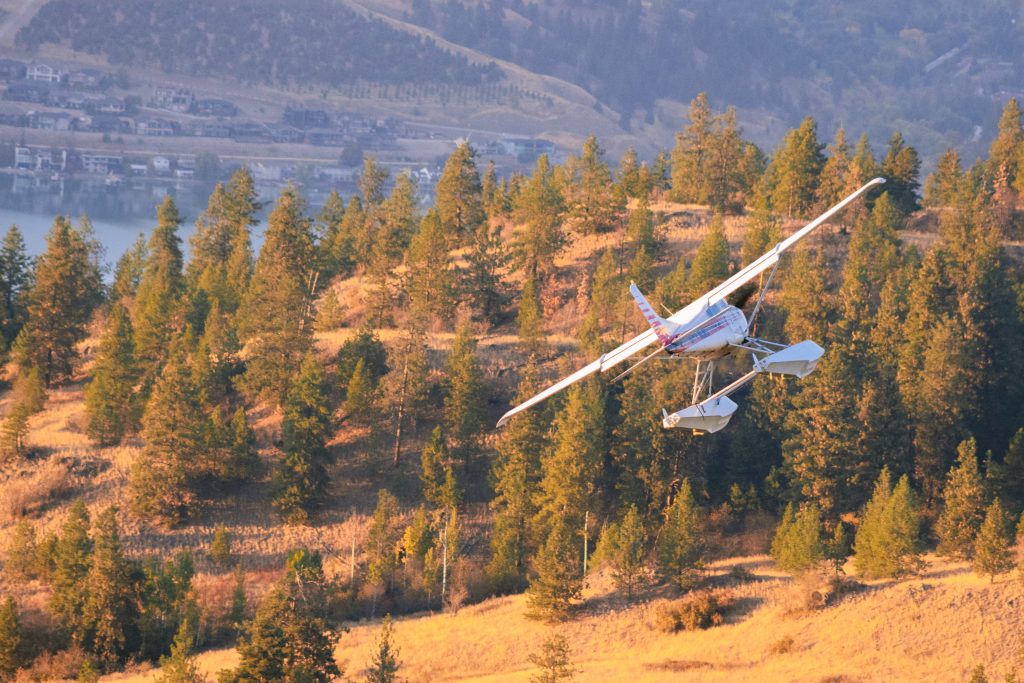
To identify the best private aviation winery tours usa, one must first decouple the concept of “winery tour” from “private aviation.” They are two distinct, albeit overlapping, industries. A common misunderstanding is that “tour operators” provide the aviation component. In reality, they are usually brokers or hospitality planners who outsource the flight segment. The most sophisticated travelers treat these as two separate procurement streams: the flight management (charter) and the destination curation (ground).
For instance, landing at a major commercial hub (like SFO or PDX) to reach Napa or Willamette Valley defeats the purpose of private aviation. The best private aviation winery tours usa leverage smaller, specialized airfields—such as the Napa County Airport (KAPC) or McMinnville Municipal (KMMV)—which significantly reduce the “last-mile” friction. The primary error is selecting a flight provider that does not have experience operating in these specific, often weight-restricted or noise-sensitive environments.
Deep Contextual Background
As private aviation became more accessible, the bottleneck shifted from “how do we get to the state?” to “how do we get to the vineyard?” The systemic maturation of the General Aviation (GA) sector in the United States—specifically the development of robust FBOs (Fixed Base Operators) in rural wine-producing corridors—has enabled a new level of viticultural access.
Historically, wine tourism was a “drive-to” experience. Today, the convergence of high-net-worth (HNW) demand and the proliferation of Part 135 air charter providers has created a new category of “fly-in” experiences. Understanding this evolution is crucial: the systems that support these tours today are based on decades of flight planning data, airport infrastructure investments, and the gradual decentralization of the hospitality industry from urban centers to rural estates.
Conceptual Frameworks and Mental Models
To manage the logistics of the best private aviation winery tours usa, planners must apply rigorous mental models:
-
The FBO-to-Vineyard Distance Constant: This is the measurement of time, not distance. A vineyard 20 miles away might take 90 minutes to reach due to winding roads or traffic, while a vineyard 40 miles away might take 40 minutes via highway. The FBO (Fixed Base Operator) location is the pivot point for all ground logistics.
-
The Payload/Range/Performance Matrix: Small airfields in wine country often have shorter runways. An aircraft that is optimal for a cross-country flight may be incapable of landing at the target regional airport. The model dictates that the aircraft choice must be secondary to the airfield constraints.
-
The Mission Continuity Model: This framework accounts for the “what-if.”
Key Categories and Operational Variations
The industry can be categorized by the level of operational integration.
| Category | Operational Focus | Primary Constraint | Suitability |
| Fully Managed Charter | Door-to-Door Coordination | High Cost | High-Volume/Efficiency |
| Boutique Brokerage | Curation/Exclusivity | Availability | Intimate/Small Groups |
| DIY Logistics | Cost Control | Planning Complexity | Experienced Planners |
Realistic decision logic dictates that for a mission-critical or high-budget event, a “Fully Managed” model is the only way to mitigate the risk of logistical fragmentation. If the ground transport is not synchronized with the pilot’s duty times, the entire tour fails.
Detailed Real-World Scenarios
-
Scenario A: The Multi-Stop Regional Circuit. A group plans to visit four wineries in the Willamette Valley. The constraint is the ground transit time between estates. The failure mode is attempting to schedule too many stops, resulting in rushed tastings. The success mode is using a dedicated local concierge to pre-clear arrivals and minimize the “wait time” at estate gates.
-
Scenario B: The Weather-Delayed Return. A group lands in a regional airfield (e.g., KSTS) and weather sets in, closing the field for departure. The failure mode is having no ground-based contingency plan. The second-order effect is a forced drive to a major commercial airport, incurring significant last-minute costs.
-
Scenario C: The Payload Mismatch. A group of six arrives in a light jet that cannot accommodate the luggage and the wine purchases for the return flight. The failure mode is the “excess weight” penalty or the need to ship cases separately, which disrupts the seamless nature of the trip.
Planning, Cost, and Resource Dynamics
The economic management of the best private aviation winery tours usa requires a granular view of the total cost of ownership for the trip.
-
Direct Costs: Charter hourly rates, fuel surcharges, federal excise tax (FET), and landing fees at the regional airfield.
-
Indirect Costs: The “opportunity cost” of the flight crew wait time (overnight fees) and the premium for high-season ground transportation.
-
The Variability Coefficient: Ground transportation in remote wine regions is often supply-constrained. During harvest season, the cost and availability of premium chauffeured vehicles can fluctuate dramatically, requiring early booking.
| Cost Element | Predictability | Audit Frequency |
| Flight Charter | Moderate | Pre-Booking |
| Ground Logistics | Low | Quarterly |
| Estate Tasting Fees | High | Per Incident |
| Contingency Buffer | Low | Constant |
Tools, Strategies, and Support Systems
-
FBO Verification Tools: Use platforms that verify runway length and fuel availability at target airfields to ensure the aircraft is compatible.
-
Concierge-Level Dispatch: Ensure the charter broker has a dedicated dispatch team that communicates directly with your ground transportation lead.
-
Local “Fixer” Networks: Establish a relationship with a local car service that understands the pace of private aviation (e.g., they track the tail number and adjust for early/late arrivals).
-
Weather Contingency Dashboards: Utilize professional flight tracking tools that provide real-time updates on local visibility and crosswind limitations for the target airfield.
-
Digital Itinerary Platforms: Use centralized collaboration tools to ensure all participants are aligned on the minute-by-minute ground schedule.
Risk Landscape and Failure Modes
Risk in these excursions is rarely about the flight itself; it is about the “seams” between segments.
-
The Ground-Link Disconnect: The flight lands on time, but the driver is stuck in local traffic. The efficiency gain of the jet is erased on the ground.
-
The Regulatory Bottleneck: Many boutique wineries require appointments weeks in advance. A flight schedule change, however minor, can cause the group to miss an exclusive tasting slot, which cannot be easily rebooked.
-
The “Weight” Failure: The wine purchased at the vineyard exceeds the aircraft’s weight and balance limitations. This is a common and embarrassing failure mode that requires secondary shipping arrangements.
Governance, Maintenance, and Long-Term Adaptation
If these tours are a recurring requirement, governance is necessary.
-
The Post-Trip Audit: After every excursion, log the “Actual vs. Planned” arrival times at wineries and the airport. Identify the source of friction (e.g., specific traffic corridors, FBO delays).
-
Adjustment Triggers: If a specific region consistently results in logistical friction, trigger a re-evaluation of the airfield or the ground transport provider.
-
Layered Checklist:
-
Technical: Does the airfield have the infrastructure for your aircraft size?
-
Financial: Are all surcharges (fuel, landing) itemized in the master invoice?
-
Personnel: Is the ground driver trained in high-net-worth service protocols?
-
Measurement, Tracking, and Evaluation
-
Leading Indicators: Time between “flight request” and “confirmed ground itinerary.”
-
Lagging Indicators: Total Cost Per Tasting Hour (TCPTH). This is a helpful metric to assess if the tour is providing sufficient value for the logistical effort expended.
-
Documentation Example: Maintain a “Logistical Ledger” for every trip. Record the tail number, the FBO used, the ground operator, and a rating of the “smoothness of handoff” between flight and ground.
Common Misconceptions and Oversimplifications
-
“Flying private means you can land anywhere.” No. You are limited by runway length, weight restrictions, and FBO capabilities.
-
“The broker handles the winery bookings.” Most charter brokers do not book wine tastings. You need a separate ground concierge.
-
“It’s an all-inclusive price.” Rarely. Almost every segment (flight, driver, tasting) will be billed through separate entities.
-
“Harvest season is the best time.” It is the most crowded and expensive time. For privacy and access, off-season or late-season travel is often superior.
-
“All wineries welcome private aviation guests.” Some estates value exclusivity and may limit the number of visitors, even if you arrive by jet.
-
“Large groups are as easy as small ones.” Large groups face severe constraints regarding transportation availability and tasting room capacity.
Ethical and Contextual Considerations
The environmental footprint of utilizing private aviation for short-haul vineyard tours is a growing concern for many HNW individuals. Responsible planning involves vetting operators who offer carbon-offset programs and choosing airframes that are fuel-efficient for the mission distance. Furthermore, there is an ethical dimension to local impact; ensuring that the ground transportation and winery visits support local, sustainable businesses rather than purely extractive, high-volume tourism entities is part of a mature planning strategy.
Conclusion
The pursuit of the best private aviation winery tours usa is, at its core, a test of operational coordination. It demands a move away from the “consumer” mindset and toward the “logistics planner” role. By prioritizing the synchronization of flight schedules with ground-side infrastructure, and by anticipating the failure modes inherent in such a multi-layered itinerary, travelers can successfully integrate the speed of aviation with the slow, deliberate nature of viticulture. If treated with the rigor of a corporate deployment, these tours provide an unmatched level of utility and experience.